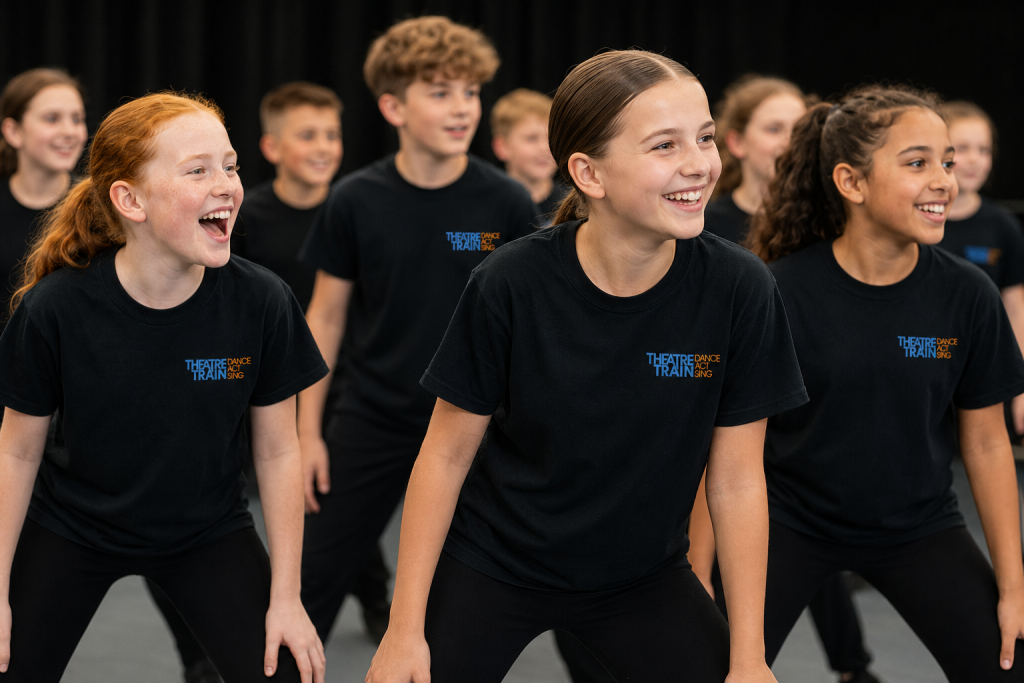
In today’s world of instant fame and reality television, it’s easy to believe that training specifically for the screen is the fastest way to success. However, true performance skill — the kind that lasts a lifetime — is built on the stage.
Theatre training builds a stronger, more complete actor. Here’s why the stage should come first before stepping in front of any camera.
Theatre Training Builds the Essentials
Theatre work demands that actors master the fundamentals: voice projection, physical presence, timing, emotional truth, and audience connection.
There are no second takes on stage. Young performers learn to be prepared, to listen actively, and to respond authentically to what is happening in the moment.
On television, if something goes wrong, you can simply stop and start again. In the theatre, mistakes must be incorporated and overcome. This develops resilience, adaptability, and true confidence — qualities that make screen performances stronger and more natural.
Acting for an Audience Sharpens Your Skills
In theatre, every performance is a shared experience between actor and audience.
Young performers learn to read the room, feel the energy, and adjust their performance accordingly. They become masters at understanding pacing, rhythm, and storytelling — skills that are essential when acting for television, where subtleties still need a foundation of truth and precision.
TV training without live performance experience can leave actors overly reliant on the safety of retakes. Theatre demands courage, consistency, and clarity — and that shows on any screen.
What Great Practitioners Like Joan Littlewood Believed
The legendary director Joan Littlewood championed the idea that theatre should be truthful, spontaneous, and connected to real life — not mechanical or manufactured for appearance’s sake.
She famously said:
“Good theatre draws the energies out of the place where it is and gives it back as joie de vivre.”
Littlewood believed that actors should engage deeply with their audience and the world around them. This foundation in authentic human connection creates performances that are not only powerful on stage, but magnetic on screen.
Her philosophy reminds us: master the theatre, and you will master any role, anywhere.
Theatre Teaches Presence, Not Just Performance
On stage, actors must project their emotions across the entire theatre, without losing authenticity. This teaches them to command space, hold attention, and stay connected to their character, no matter what.
These skills are equally important in television — where, despite the smaller scale, an actor’s inner life must remain rich, alive, and truthful.
Theatre training ensures that performers bring depth and complexity to even the smallest camera close-up.
In Conclusion: Why Stage First, Screen Later
Theatre training provides the rigour, heart, and authenticity that every screen actor needs.
It develops strong, resilient, adaptable performers who understand the art of storytelling, whether it’s for one person or one million.
By mastering the stage first, young actors are better prepared for the challenges and opportunities of television and film.
If you’re looking for real, professional-level training in acting, singing, and dancing for your child, Theatretrain Maldon has been building young performers’ skills for almost 19 years.
To find out more about our classes and how we can help your child shine both on stage and off, visit www.theatretrain.co.uk/maldon.