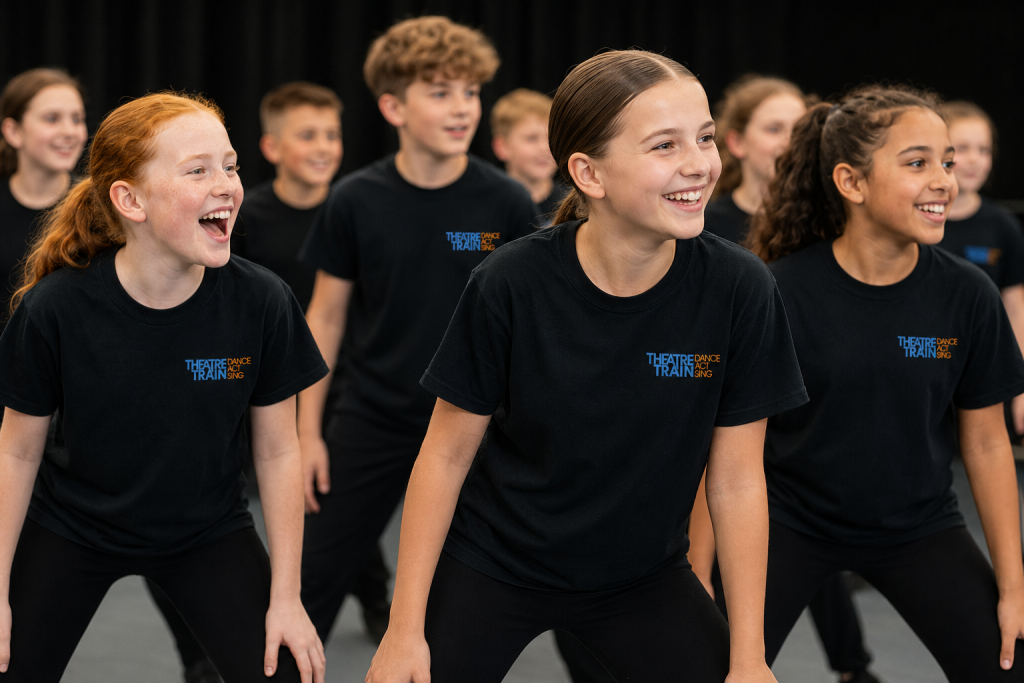
Children need places where they can feel accepted.
Not judged. Not compared. Not pushed to be someone they are not.
They need somewhere they can walk in, take part and slowly feel that they matter. That is one of the quiet strengths of performing arts classes. Yes, children learn singing, dancing and acting. They learn routines, songs, scripts and stagecraft. But underneath all of that, something even more important can begin to happen.
They start to feel part of something.
At Theatretrain Maldon, our performing arts classes in Essex are about more than putting on a show. They are about helping children and young people feel included, valued and connected. For some children, that feeling comes quickly. For others, it takes time. Both are perfectly normal.
A place where everyone has a part
In a performance, every person matters. The lead roles matter. The ensemble matters. The child holding a harmony matters. The student remembering a movement cue matters. The person encouraging a nervous friend matters too.
That is one of the lovely things about theatre. It teaches children that being part of a group does not mean disappearing. It means contributing.
Some children love being centre stage. Others prefer to build confidence gradually from within the group. Performing arts gives room for both. It allows young people to take part in a way that stretches them, but does not have to overwhelm them.
Belonging is not about being the loudest. It is about knowing you have a place.
Friendships grow naturally
Friendship can be hard for children when it feels forced. Performing arts can make connection feel more natural because the focus is shared. Children are working towards something together. They have a reason to talk, listen, laugh, try again and support each other.
A warm-up game can break the ice. A dance routine can create teamwork. A scene can help children understand each other. A song can bring different voices together and make one bigger sound.
It is simple. But it is powerful.
Children often connect through doing. When they rehearse together week after week, they begin to recognise each other’s strengths. They notice who is funny, who is kind, who remembers the moves, who helps when someone gets stuck. Those little moments build trust.
Belonging builds confidence
Confidence does not only come from applause. It also comes from being seen.
A child who feels ignored may hold back. A child who feels safe is more likely to try. That might mean answering a question, joining in with a movement, singing a little louder or putting their hand up for a line. These steps might look small from the outside, but for the child taking them they can be huge.
When children feel they belong, they stop spending all their energy worrying about whether they fit in. They can begin to focus on what they are learning. They can take creative risks. They can make mistakes and recover. They can enjoy the process.
That is where real confidence starts. Not with pressure. With safety. With encouragement. With a group that wants you to succeed.
Learning to support others
Belonging is not just something children receive. It is something they help create.
In performing arts, children learn that their attitude affects the room. They learn to listen when someone else is speaking. They learn to clap for others. They learn to make space. They learn that a group works best when everyone gives energy, attention and respect.
These are life skills. They matter in school. They matter in friendships. They matter in families. They matter in future workplaces too.
A rehearsal room is a brilliant place to practise them because the lesson is immediate. If people listen, the scene works. If people support each other, the group improves. If people commit, the performance grows stronger.
A positive place to grow
Every child is different. Some arrive ready to jump straight in. Some watch first. Some need reassurance. Some surprise themselves once the music starts.
That is why the environment matters so much. Children should be allowed to grow at their own pace, while still being gently encouraged to take the next step. Performing arts can give young people a positive space to discover what they are capable of, without feeling they have to be perfect straight away.
At Theatretrain Maldon, we see how powerful that can be. A child who once stood quietly at the side begins to join the group. A student who worried about getting things wrong starts helping someone else. A young performer who lacked confidence begins to stand taller.
Little by little, they do not just learn how to perform.
They learn that they belong.