Small Steps, Big Confidence: How Children Grow Through Rehearsal
Confidence is not always loud.
It is not always a child stepping into the centre of the stage and suddenly feeling fearless. It is often much quieter than that.
It can be a child joining in with a warm-up for the first time. It can be singing the last line a little more clearly. It can be remembering where to stand. It can be making eye contact, asking a question or trying again after getting something wrong.
Small steps. Big progress.
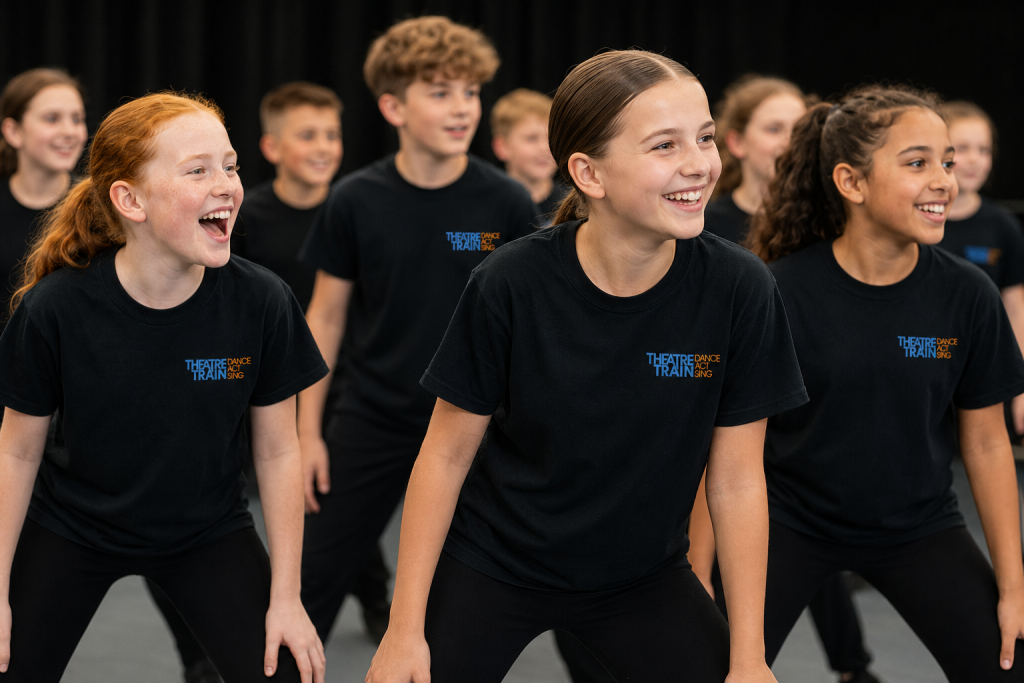
At Theatretrain Maldon, we see how rehearsal helps children build confidence in a steady, meaningful way. Our performing arts classes in Essex give young people the chance to practise, improve and feel proud of what they are achieving.
Confidence grows through repetition
Children do not usually become confident because someone simply tells them to be confident. They become confident by experiencing progress.
Rehearsal is brilliant for this because it gives children repeated chances to try. A dance routine that feels impossible at first becomes familiar. A song that once felt too fast begins to make sense. A scene that felt awkward becomes clearer with practice.
Each time a child improves, they collect evidence that they can do hard things.
That matters. Confidence is built from those moments. Not all at once, but gradually.
The importance of safe challenge
Children need to be challenged, but they also need to feel safe.
If something is too easy, they may not grow. If something feels too frightening, they may shut down. Performing arts works well when there is a balance. Children are encouraged to take the next step, while knowing they are supported by teachers and classmates.
That next step will look different for every child.
For one child, it might be performing a solo line. For another, it might be joining the front row for a dance. For someone else, it might be staying focused for a full rehearsal or speaking clearly in a group scene.
Progress is personal. That is why it is so important to notice it.
Mistakes become part of learning
One of the best things children learn in rehearsal is that mistakes are not the end of the world.
Someone forgets a line. A move goes wrong. A note does not quite land. A cue is missed. Then what happens? The group resets, tries again and keeps going.
That lesson is powerful.
Children begin to understand that mistakes are not proof they cannot do something. They are part of learning how to do it better. This can take away some of the fear around trying, especially for children who worry about getting things wrong.
When a child learns to recover, they become braver.
Being seen in the right way
Performing arts gives children the chance to be seen, but in a way that can be built up gently.
They might begin as part of a group. They might then take on a small moment. Later, they may feel ready for something more. The point is not to rush every child into the spotlight. The point is to help them discover that they can handle more than they thought.
A supportive rehearsal room helps with this. Children see others trying too. They learn that everyone has strengths and everyone has things to work on. They realise they are not alone in feeling nervous sometimes.
That shared experience can be incredibly reassuring.
Confidence beyond the stage
The confidence children build in performing arts does not stay in the rehearsal room.
It can help them speak up at school. It can help them meet new people. It can help them present work, ask for help or take part in group activities. It can help them understand that nerves are normal and that they can still do something even when they feel unsure.
This is why performing arts classes are about so much more than performance. The show may be the exciting part that families see, but the growth often happens long before the curtain opens.
It happens in rehearsal. It happens in the trying. It happens in the little moments that build up over time.
Little by little
Children do not need to become confident overnight.
They need opportunities to practise being brave in small ways. They need encouragement. They need structure. They need teachers who notice the effort as well as the outcome. They need a place where progress is celebrated, not just perfection.
At Theatretrain Maldon, we believe those small steps matter. Because a child who learns to try, recover and keep going is building something important.
Not just for the next performance.
For life.