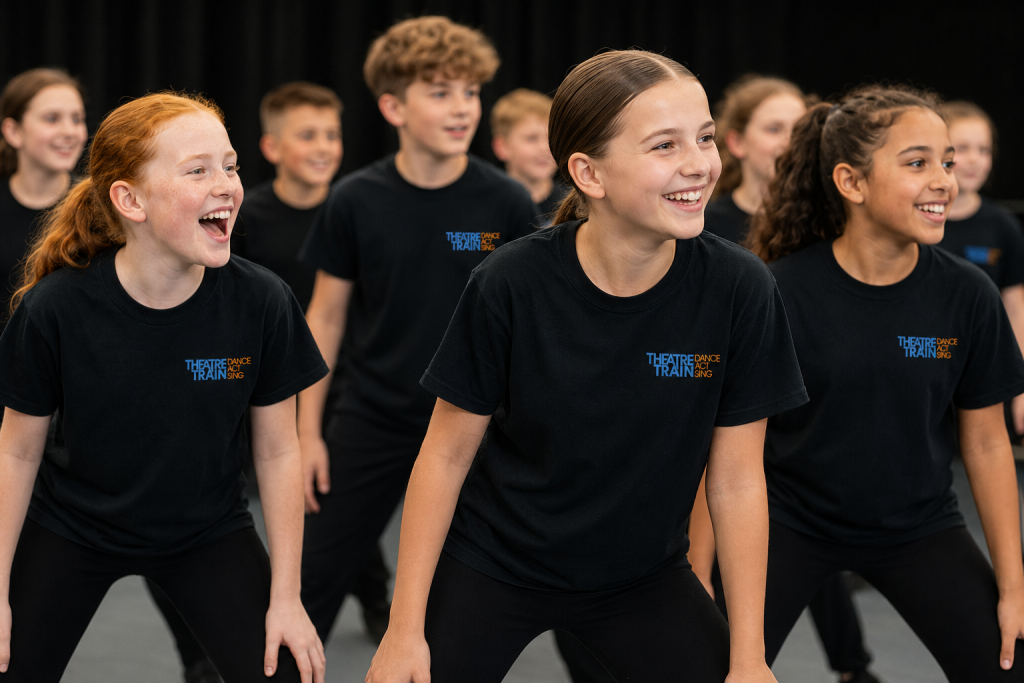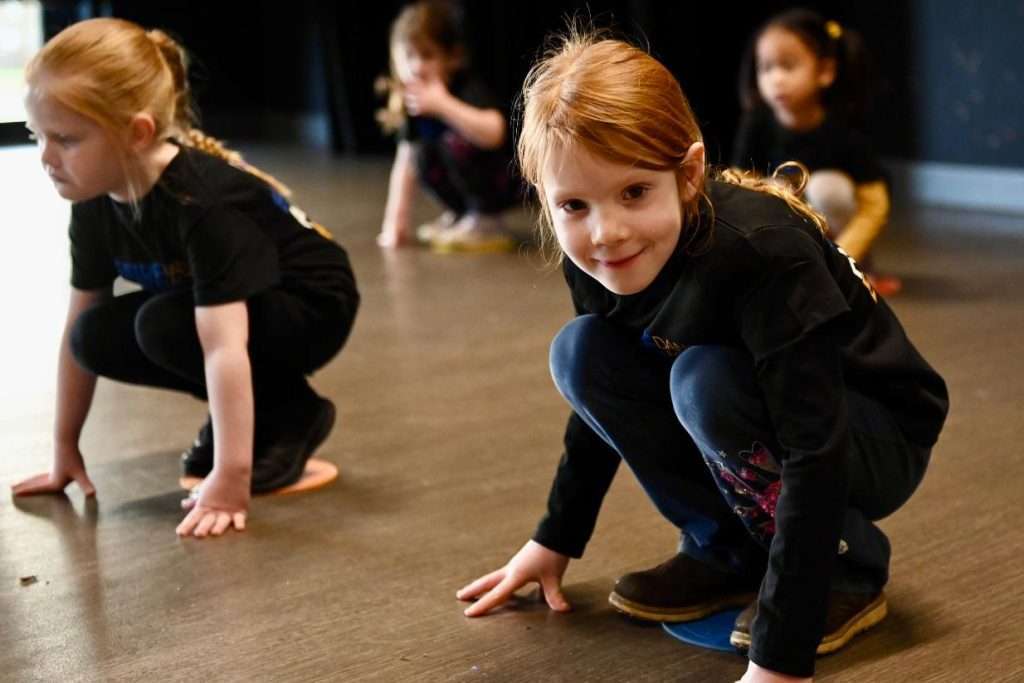
Performing arts classes are often seen as an optional extra-curricular activity. However, for many families at Theatretrain Maldon, weekend performing arts classes have become an important part of their child’s development.
Parents regularly tell us that theatre, drama, singing and dance have helped their children in a variety of ways. One parent told us that their children’s creativity and confidence have grown significantly through attending our performing arts classes. Another parent shared that they were initially worried about their child, but within a few weeks of attending classes, they noticed their child had come out of their shell.
Our teaching team has also observed that performing arts activities support children’s cognitive, academic and social development. These classes help improve focus, memory, teamwork, discipline, problem-solving skills and emotional intelligence, supporting children as they grow and learn.
Below are eight key benefits of performing arts classes for children.
What Are the Benefits of Performing Arts for Children?
1. Academic Benefits
One of the most common questions parents ask is how performing arts classes can support academic performance. Research has found a strong link between participation in drama, music and dance and academic achievement.
A report by the Arts Education Partnership found that children who attend music, dance and drama classes often demonstrate stronger reading, writing and maths skills. Other studies into creative arts have shown improvements in literacy and critical thinking, leading many researchers to suggest that the arts play an important role alongside academic learning.
2. Neurological Benefits of Performing Arts
Performing arts classes encourage a growth mindset by giving children a safe place to experiment, learn at their own pace and make mistakes without fear of judgement.
Research into arts and brain development has shown that activities such as music and movement can positively influence brain development. Long-term studies have found that children who participate in music and creative arts experience improvements in attention, focus and motor skills, all of which support learning across different areas of life.
3. Develops Emotional Resilience
The arts provide children with a healthy creative outlet. Many children and teenagers find it difficult to understand and express their emotions, which can impact confidence and wellbeing.
At Theatretrain Maldon, drama and musical theatre classes give children opportunities to explore different roles and emotions in a supportive environment. Through acting, singing and movement, pupils learn how to express themselves confidently and manage a wide range of emotions.
Singing and dancing can also act as effective stress relievers, giving children a positive outlet for self-expression.
4. Strengthens Teamwork
Collaboration is central to performing arts classes. Whether working on drama, singing or dance, pupils learn to work together, listen to others’ ideas and contribute positively as part of a group.
This helps children build friendships, develop empathy and learn how to cooperate with others — important life skills that extend beyond the classroom.
5. Enhances Communication Skills
Performing arts classes help children develop strong communication skills. Through dialogue, songs and group work, pupils learn how to express their thoughts clearly and listen to others with confidence.
These skills can help reduce social anxiety and support children in everyday situations at school and beyond.
6. Teaches Discipline
Performing arts encourage discipline through focus, consistency, patience and attention to detail. Learning lines, lyrics and choreography requires commitment and perseverance.
In classes, children learn that mistakes are part of the learning process. Theatretrain’s supportive environment helps pupils reflect, improve and continue developing with confidence and resilience.
7. Improves Physical Coordination
Dance and movement activities help improve balance, posture and coordination, strengthening the connection between the brain and body.
Acting and singing also engage breath control and physical awareness, supporting overall fitness and confidence.
8. Builds Self-Esteem
Theatretrain Maldon places a strong emphasis on building confidence and self-esteem. Children are encouraged to feel heard, respected and supported in class.
Performance opportunities, from informal sharings to larger shows, help pupils build confidence and pride in their achievements, often transforming shy children into confident performers.
You can learn more about our classes here. This will help you learn more about how our performing arts school in Maldon can help your child grow.