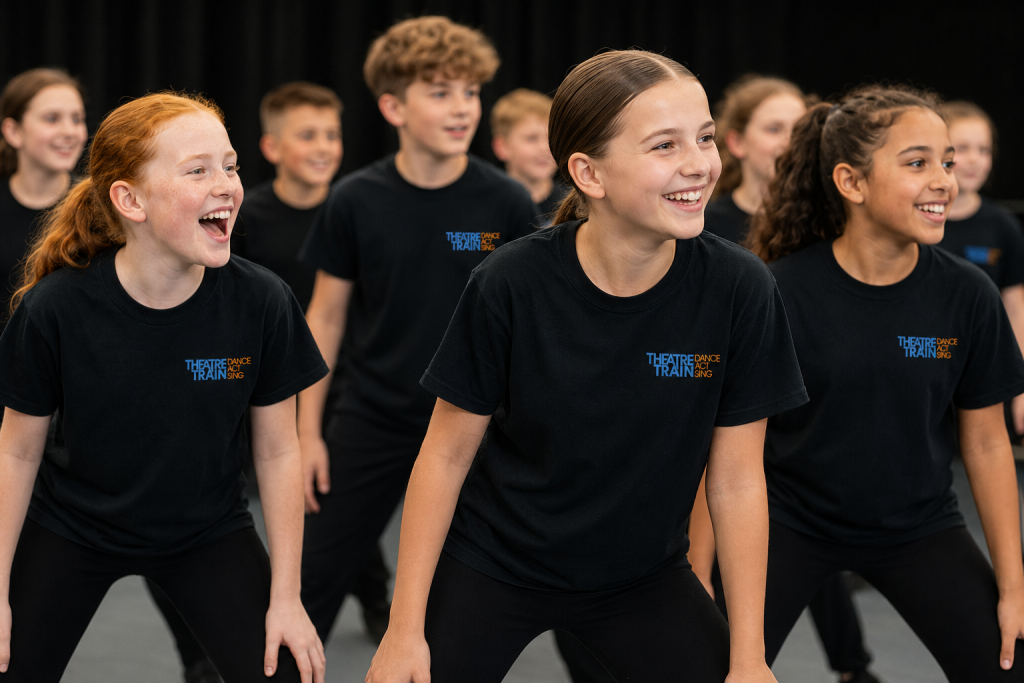
The connection between music, dance, and academic performance is profound and multifaceted. At our theatre school, we emphasise the importance of integrating music and dance into our performing arts curriculum, recognising their potential to enhance learning outcomes and foster creativity in young people.
Engaging in music and dance stimulates various areas of the brain, promoting cognitive development and improving memory. Studies have shown that children who participate in music education often perform better in subjects such as mathematics and reading. This enhancement occurs because learning music involves recognising patterns, rhythms, and sequences, which directly correlates with mathematical concepts. By integrating music into their education, students can enhance their analytical skills and approach academic challenges with confidence.
Similarly, dance encourages physical movement and coordination, both of which contribute to improved focus and concentration. Participating in dance requires students to be aware of their bodies, spatial awareness, and rhythm. This heightened sense of focus can carry over into academic settings, helping students concentrate better during lessons and while studying. The discipline required in learning choreography also instils a strong work ethic, motivating students to approach their studies with the same dedication.
To boost your child’s academic performance through music and dance, consider these strategies:
- Encourage Participation in Music Classes: Support your child’s involvement in music lessons or ensembles that enhance their appreciation for rhythm and patterns.
- Promote Dance Activities: Encourage your child to engage in dance classes or groups that foster physical movement and coordination.
- Incorporate Music and Movement at Home: Create opportunities for your child to enjoy music and dance at home, enhancing their creative expression and cognitive development.
- Celebrate Their Artistic Achievements: Acknowledge and celebrate your child’s efforts in music and dance, reinforcing the importance of these skills in their overall learning experience.
In conclusion, incorporating music and dance into performing arts classes significantly boosts academic performance by enhancing creativity, concentration, and cognitive development. By engaging in these activities, young people develop valuable skills that benefit their overall educational experience. If you’re interested in helping your child excel academically through performing arts, visit www.theatretrain.co.uk/maldon for more information!