I was contacted this week by the trustees of the Matchgirls’ Memorial. They had found letters I had written in the 1980s in an archive in Bristol. In 1888, there was a strike by Matchgirls in London’s East End. Their work involved dipping matches in phosphorous and they suffered terribly for small wages.
Their strike was a great success and I hope one day it will make a great film.
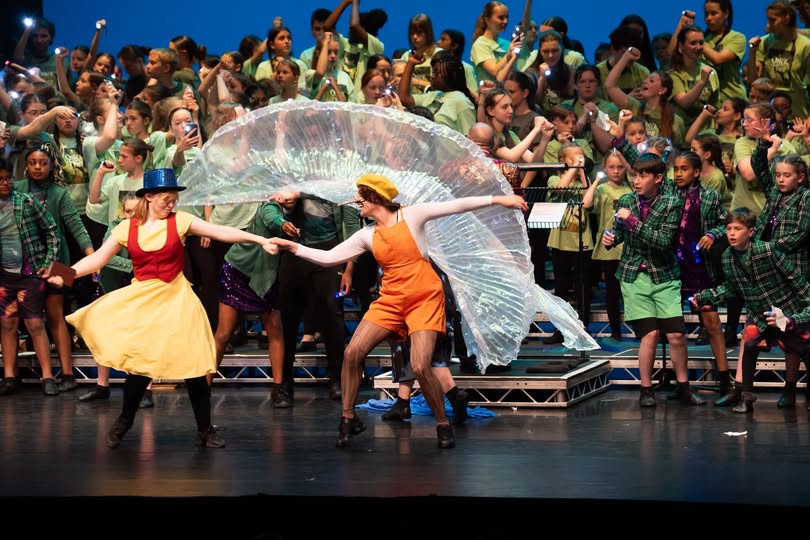
I directed The Matchgirls, a musical by Bill Owen (of Last of the Summer Wine fame), in a school in East London in the 1980s. It ran so successfully at the school that we were invited to give a performance later in the year at the Theatre Royal, Stratford. Later at the Curtain Theatre, I established a youth theatre where Catherine Tate, now our patron, was a member for 5 years. I directed a play that Ross Taylor came to see. He was a West End impresario who had directed Petula Clark in The Sound of Music. He was also the producer of a long-running hit called Charlie Girl. He told me an interesting story.
In 1966, he had directed Strike a Light! A musical in the West End. He told me it was originally written by a couple of amateur actors in Leeds. But the timing was very difficult. There was already Bill Owen’s Matchgirls running so it meant two shows about the Matchgirls were in the West End at the same time. Something had to give, and sadly, Strike a Light closed after 3 performances. He told me that he had always wanted to revive the show – it was a matter of honour for him. He asked me if my youth theatre would take it on. It was a fantastic concept because that year was 1988 – the centenary. Of course, I agreed and he arranged for me to meet George Michie, who was the musical director on that production. George created the band parts and musical arrangements for our production and conducted the orchestra.
Ross, who was a very experienced producer and choreographer, asked if he could audition with me. At once, I realised that he was old-school and had an eye or an ear for who should play who. He muttered to me their character type as they walked through the door. Waif, brash young man and so on. He also had a keen theatrical eye. For the part of a young innocent, he told me to get the girl to wear a white ribbon in her hair – shorthand for innocence. As I say, he was old school, but he knew his stuff.
We had a difference of opinion. After we had seen everyone, he said to me that we couldn’t possibly have any black actors in the show – he said they would not be historically correct. I begged to differ. I said black people certainly lived in the East End in the 1880s, but also these kids were our youth theatre, and they were all going to be in the production, or it wouldn’t happen. It wasn’t a conversation that would need to happen today.
He accepted what I said and left me to my job. When he came to see the play, he said to me afterwards that when he watched after a few minutes, he forgot about the colour of their skin and accepted everyone as people. As we know, that aspect of theatre has changed over the years until today we have blind casting.
For my part, I think the better piece is by Bill Owen. He captured and had more sympathy with working class people and their humour. The score is jazzier and of its day, while Strike a Light! was grander but shallower for me.
I met two people who were in the 1966 production and said it was full of those long dance breaks of its day. West Side Story cast a shadow! Catherine told me she used the song “Making Friends and Meeting People” for years as an audition song.