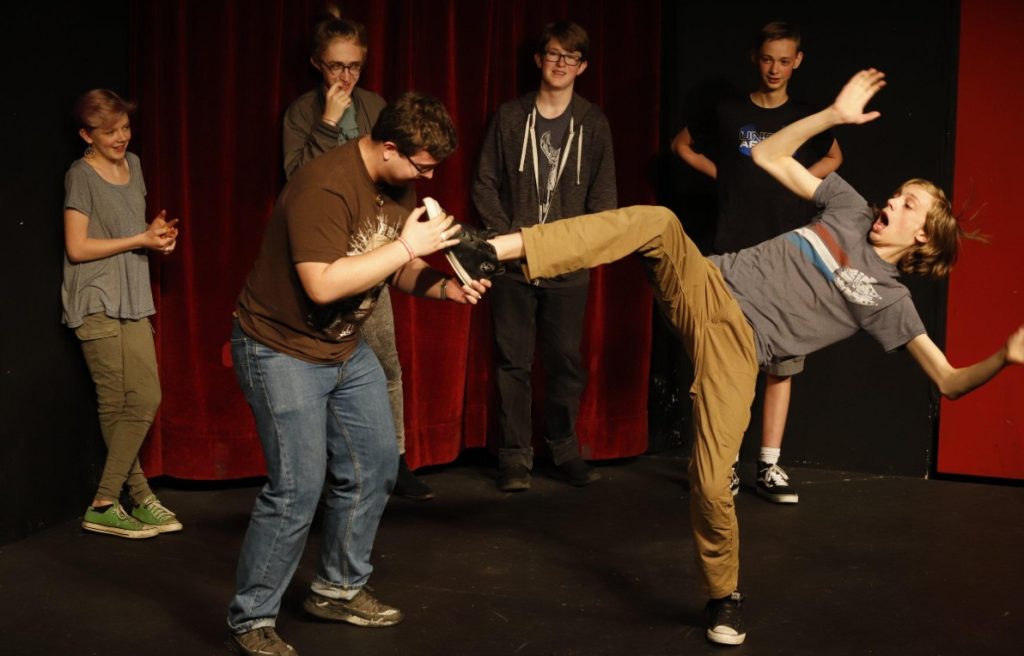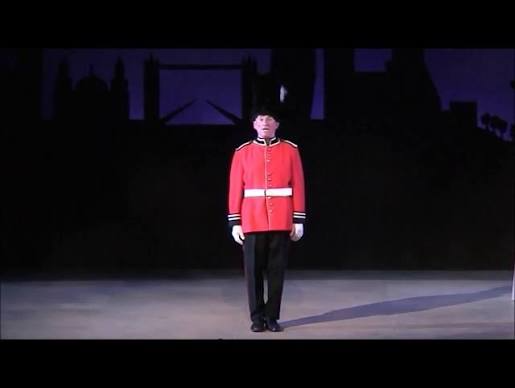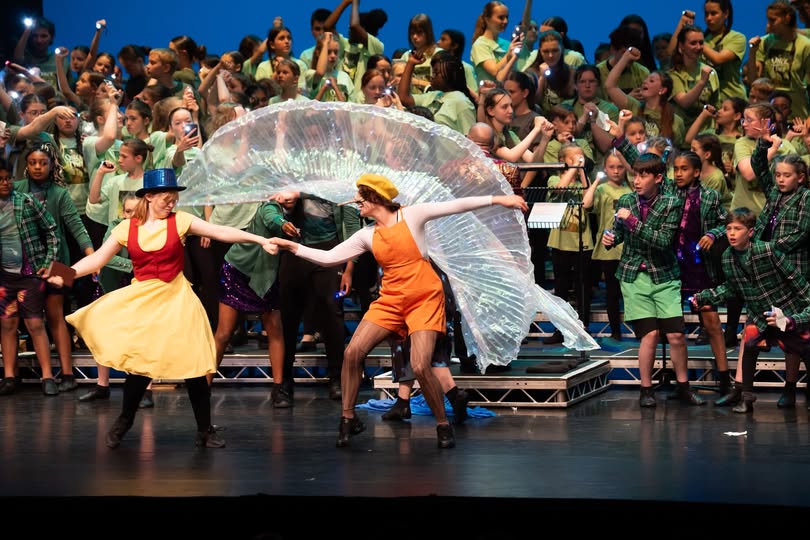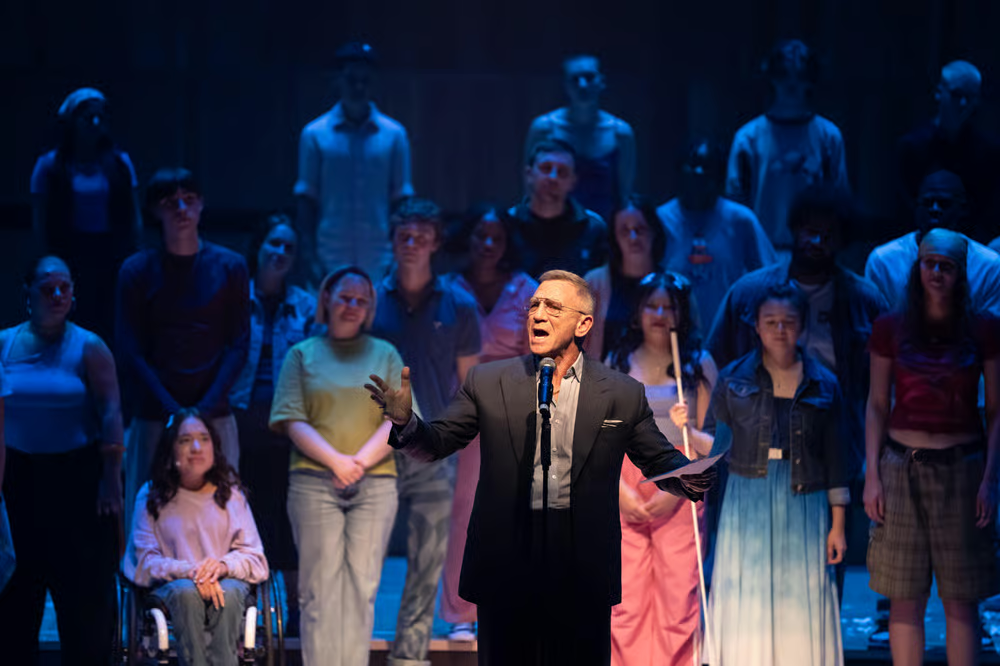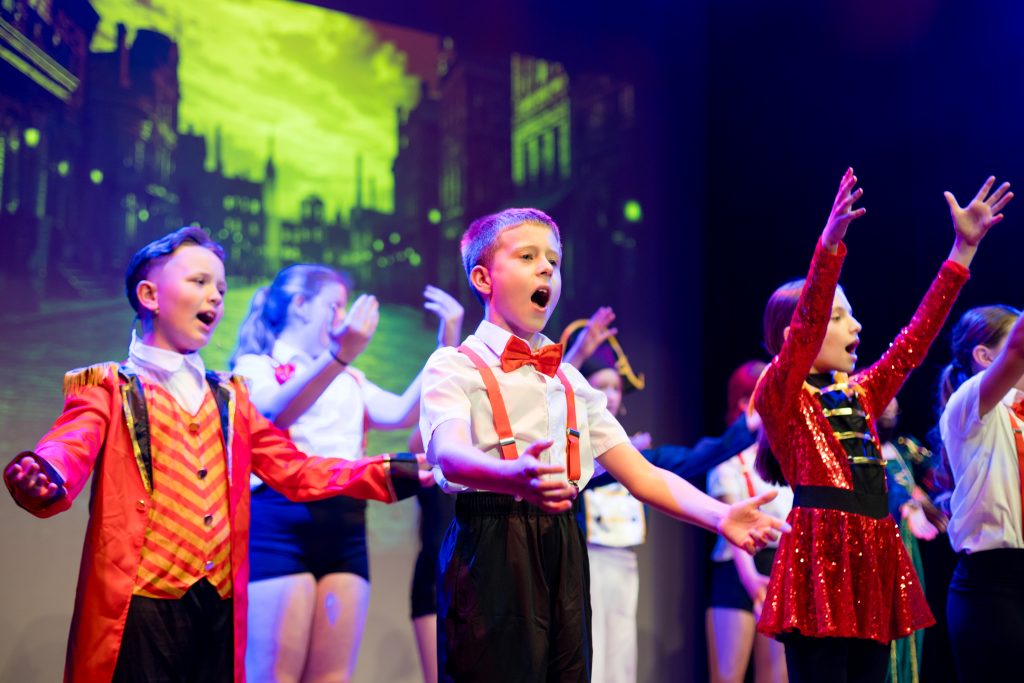
Junior versions of well-loved musicals have an obvious appeal: familiar stories, memorable songs and the chance to bring acting, dancing and singing together. Students love the characters and the fun of creating a show.
I particularly enjoy the larger-than-life characters. For students worried about looking silly, the challenge is to stop asking, “What will people think of me?” and start asking, “What would this character do?” Playing someone else gives them permission to be bolder.
In Matilda, an uncaring family and the cruel Miss Trunchbull give the children plenty to rebel against. Who doesn’t enjoy some rebellion, especially when it is directed against so much unfairness? In Shrek, ogres and a whole collection of fairytale misfits appear. What fun to be an ogre—especially when someone is actively encouraging you.
One criticism of these shows is that there are the main characters, and then there is everyone else. For me, different-sized roles aren’t the problem. What matters is that nobody feels they are just in the background.
This is where the creative teacher comes in. I think of the ensemble as a leading role shared by a group. Every entrance, reaction and exit helps tell the story. You don’t need lines to matter, but you do need to know what your character wants and how they respond to what is happening.
Take Bruce Bogtrotter, caught after eating Miss Trunchbull’s cake. The scene isn’t only about Bruce and Trunchbull. It is also about the children watching. Their fear helps us understand her power. Their reactions build on one another. If they look as though they are waiting for a bus, she has rather more work to do.
Rehearsal brings its own challenge. After several attempts, that fear can disappear, and students start going through the motions. The teacher’s job is to keep the situation alive: what are they afraid will happen? What do they want Bruce to do? How does each new development affect them?
The performers know what happens next, but their characters don’t. This is where some of the most valuable work happens: learning to notice, respond and contribute anew every time rather than simply waiting for your next line.
The principal characters may have the most words, but everyone helps make the story happen. And being part of that—not simply standing behind it—is where the fun lies.