October 26, 2026

The Strange Thing About Hands

What do you do with your hands when you're standing in front of an audience? It's a surprisingly common question, particularly among young performers! In his latest blog, Theatretrain Artistic Director Kevin Dowsett explores why something as natural as using our hands can suddenly feel so awkward when we're performing. Through a wonderfully entertaining drama exercise, Kevin demonstrates how laughter, imagination and a little loss of control can help young people overcome self-consciousness and discover the freedom to perform naturally.

There comes a time in your life when you have to get up and speak in front of others. I accept that many people would let the floor open up and swallow them rather than do so, but most of us were persuaded to do a bit of show-and-tell at school. What did we learn? It can be fun. You can discover you have a gift you didn’t know about. You might hate every minute of it and feel yourself blushing.

Actors have the same experience, although they can hide behind a character and use their imagination. One thing that you quickly discover is that your hands can feel very awkward. Teenagers are particularly affected; in fact, many seem to grow special elongated sleeves that cover their hands, so you can’t see anything but the ends of their fingers.

There you are, acting away, when you suddenly notice these clumps hanging off the end of your arms, so you ask a perfectly sensible question. “What do I do with my hands?” Not an easy one to answer because, of course, the problem is not the hands. You can’t give them separate instructions from the rest of the body. It’s really about being self-conscious in the space. What’s the solution?

I try to trick performers into a more natural performance by giving them other things to think about so they stop worrying and focus on what they are doing. Why am I here and what do I want to happen?

Students love this game, which also looks at hands. I choose a student to stand up and give the class a sort of talk. “What’s it about?” they ask. I don’t mind, I say, “Tell us about your favourite football team, the history of your town or your pet rabbit – just talk to us.” Then I get a bit sneaky, I add something else.

I ask them to work with another student. I pick one and ask the second student to be just the hands. “How do I do that?” they ask. I show them how to stand behind the speaker and slip their arms under the speaker’s arms. The speaker tucks their hands and arms behind their back.

It takes them a little time to realise that they have to work together, but the results are usually hilarious because the speaker doesn’t have complete control. That is concerning, but at the same time, it’s releasing. Imagine the speaker starts talking about a rabbit. The “arms” will hopefully pick it up and start stroking it. Once the “hands” realise they have power in the situation, all kinds of things can happen. They might beckon someone in the audience to come and stroke it as well, get their finger stuck in its mouth, and the speaker has to adapt as things change. The speaker can have fun too. They might say, “Be careful, everyone; this rabbit does enormous poos, and I think one is about to happen!” It’s fun to see what the “arms” decide to do next.

I always let them swap over and explore another scenario, but I guarantee that after that class, they’ll worry less about their hands because they are free.  

Theatretrain, a nationwide provider of weekend theatre schools for young people aged 4-18, specialises in weekly classes in acting, singing, and dancing. An emphasis is placed on learning valuable life skills such as confidence, empathy, courage, and resilience. If you know a child who loves to dance, act and sing or could do with a little confidence boost why not visit to find out what our performing arts classes can offer your child at one of our 80 locations across the UK.

Related Articles

The Lost Art of Looking Up

When was the last time you stopped looking at a screen and really noticed the world around you? In his latest blog, Theatretrain Artistic Director Kevin Dowsett reflects on how technology has changed the way we connect with others. From a frustrating encounter at a hospital reception desk to the simple pleasure of walking through a forest, Kevin explores why looking up, paying attention and being truly present are so important, particularly for young performers.
Read more >

It’s About Other People

What happens when we make mistakes, lose confidence or feel we've let others down? In his latest blog, Theatretrain Artistic Director Kevin Dowsett explores the extraordinary strength of belonging to a supportive group. Drawing on a memorable mishap from his own performing career, Kevin explains why kindness, empathy and standing together matter far more than getting everything right.
Read more >

People in Public

How much can we learn about people simply by watching how they behave around strangers? In his latest blog, Theatretrain Artistic Director Kevin Dowsett explores the fascinating unwritten rules of public spaces, from choosing a seat on the Tube to avoiding eye contact at rush hour. For actors and theatre-makers, everyday behaviour can provide some of the richest inspiration of all.
Read more >

Making an Entrance

How much can we learn about a character before they’ve even said a word? In his latest blog, Theatretrain Artistic Director Kevin Dowsett looks at the importance of those first few seconds on stage and how a simple entrance can immediately spark an audience’s curiosity. He also considers why first impressions matter beyond the rehearsal room – and what theatre might teach us about the way we enter a room in everyday life.
Read more >

Happy Birthday, NYT

In his latest blog, Theatretrain Artistic Director Kevin Dowsett reflects on the National Youth Theatre as it celebrates its 70th anniversary. Drawing on his own experiences, and those of his daughter Tamsin, Kevin explores the lasting impact of youth theatre, from confidence and self-belief to collaboration and belonging. Inspired by a special anniversary performance, he considers the lessons we carry from our younger selves and the value of learning through experience.
Read more >

The Performer’s Handbook

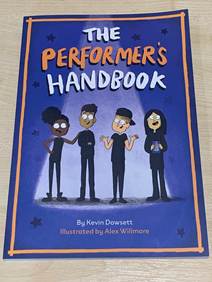
A year ago, I told our company that I wanted to write a book for our students — one that would explain all the important…
Read more >