When you are learning to act, you one day pick up a script. You have to turn those words into living, breathing human beings. It’s not as easy as it looks, as you discover when you start to speak. Once you put a script in front of someone, you can see what they are made of. Can they make it seem natural? Can they make it live? Like everything else in life, you learn it one step at a time.
You’d think it was easy, after all, we all make conversation in our lives; it’s just that when it’s written down, it becomes a bit more challenging. No one wants to seem wooden or dull, but on the other hand, you can’t speak the lines with unreal excitement or you’d look odd. The actor has to, what we call, own the feelings behind what is said if they are going to be believable.
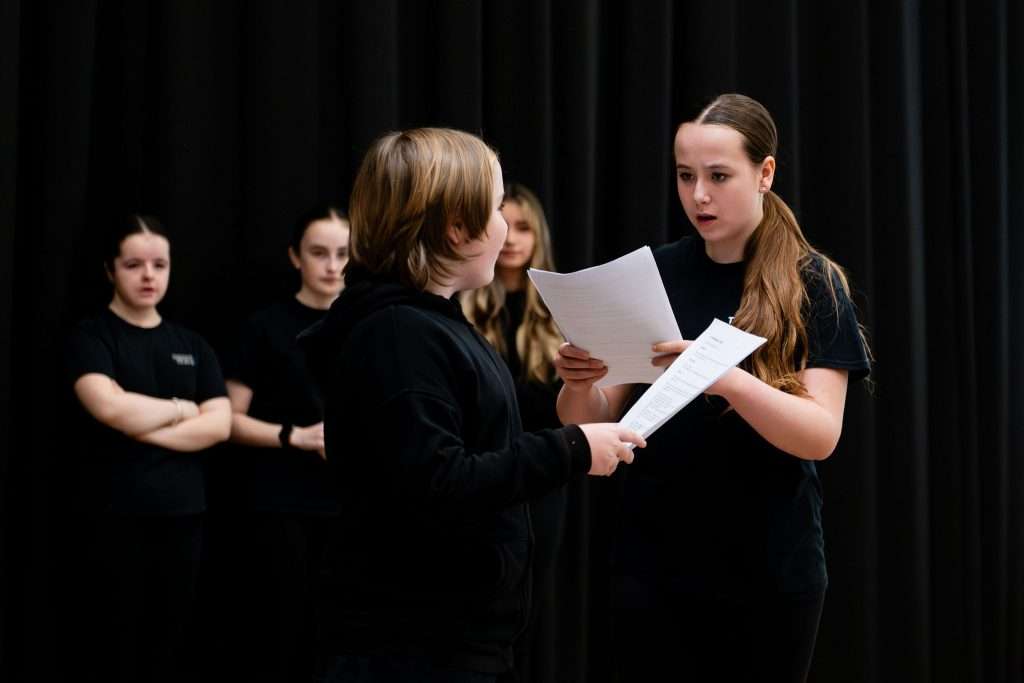
A good start is to get the actor to truly listen to the other actors – to hear what they say and respond to it. Then they might say their next line for a reason. This sounds simple, but a lot of people don’t really listen. How often have you had a conversation with someone who makes you think, “They’re not listening to me, they’re just waiting for me to stop so they can carry on with what they want to say.” They are smiling and nodding, but you sense they are somewhere else. Actors who just wait for their cue are a nightmare because there is nothing going on.
Then you have those actors who pause before everything they say. They are often unaware of it, but to us, they become predictable even if we’re not aware of why. My way of dealing with this is to click my fingers between the end of one line and the next. With nearly everyone, I can click before they speak the first word because most people aren’t awake enough to deliver the line properly. Yet in life, we easily interrupt each other and finish each other’s sentences. They get so irritated with me clicking my finger and beating them that they start to jump in too early and cut off the other actor’s line, and that’s just as bad.
Eventually, they get it, listen and find a flow between themselves and others and what a difference it makes to a play. All those little pauses add up, and when you remove them, when you make a real pause, it stands out more effectively. It also stops that tendency for audiences to cough when they get restless, because the play is not zipping along fast enough.
It’s a pleasure teaching these skills, and it’s fun to see people who started out frozen on autopilot suddenly becoming authentic and believable. Then they can move you and bring, as Shakespeare says, a mirror up to nature.