If you’re thinking about performing arts classes, one of the biggest questions is usually:
What will my child actually be doing?
Some parents picture their child standing in a circle, not quite sure what’s going on.
Others wonder if they’ll feel part of it, or just get a bit lost in the group.
So it’s probably easier if I just show you what a typical Saturday actually looks like.
Watch: What Happens in a Theatretrain Class
How a Saturday works
Each session runs for three hours.
During that time, children take part in three classes:
Singing
Dance
Drama
They’re grouped by age:
6–8 years
9–11 years
12–18 years
Each group rotates around the three subjects, so by the end of the morning they’ve experienced all of them.
The structure stays the same each week.
That consistency helps children settle quickly, especially if it’s all new to them.
They’re not trying to work out what’s happening next.
They can just get on with it.
What singing looks like
Singing usually starts with a warm-up.
Something quite simple, often a bit playful, just to get everyone using their voice.
Then they move onto a song.
Not just learning the tune, but understanding what they’re singing, who their character is and how to perform it together.
You’ll often see the group using the theatrical space, telling the story as they sing the piece.
Some children sing out straight away.
Others take a bit longer.
Over time, you notice them joining in more, little by little.
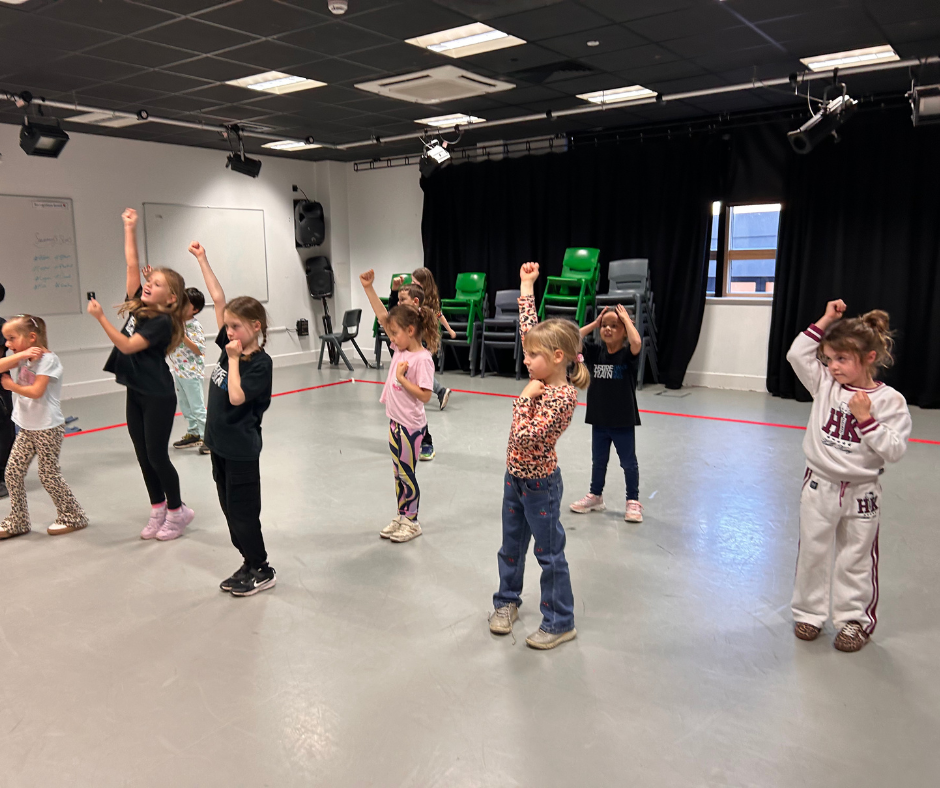
What dance looks like
Dance is usually where the energy lifts.
They’ll start with a warm-up and then move into learning a routine. Our classes are more than just steps, we are telling a story through movement.
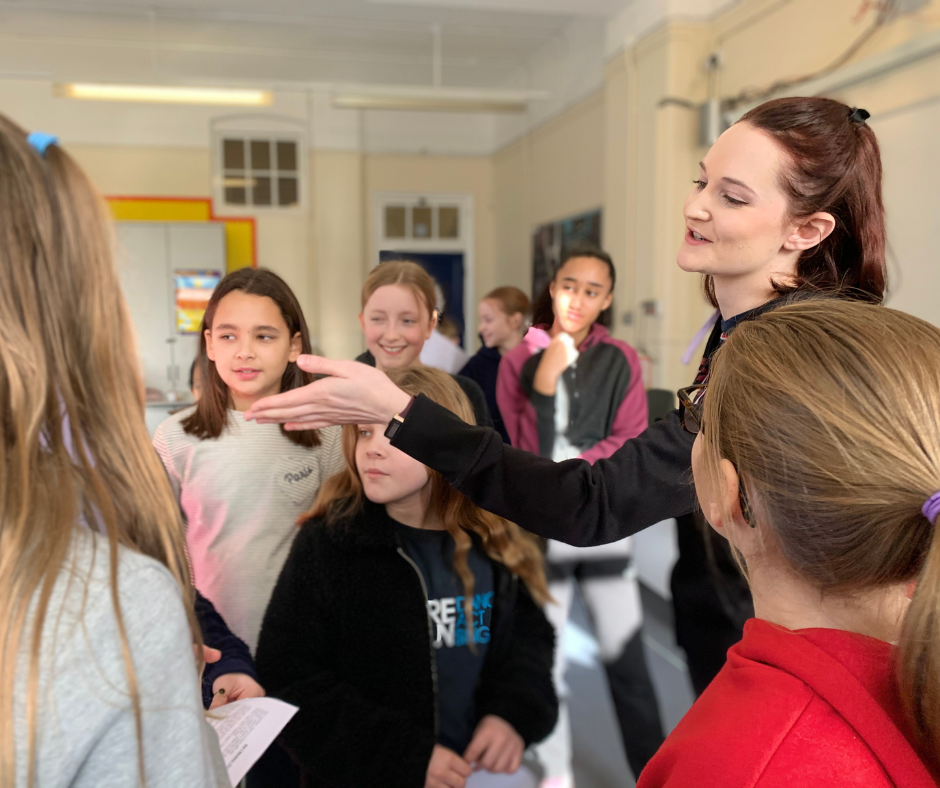
Teachers break things down step by step, so no one is expected to just pick it up straight away.
You’ll see children copying, adjusting, trying again.
Sometimes getting it wrong and laughing about it.
No one is standing on their own.
They’re all in it together, working things out as a group.
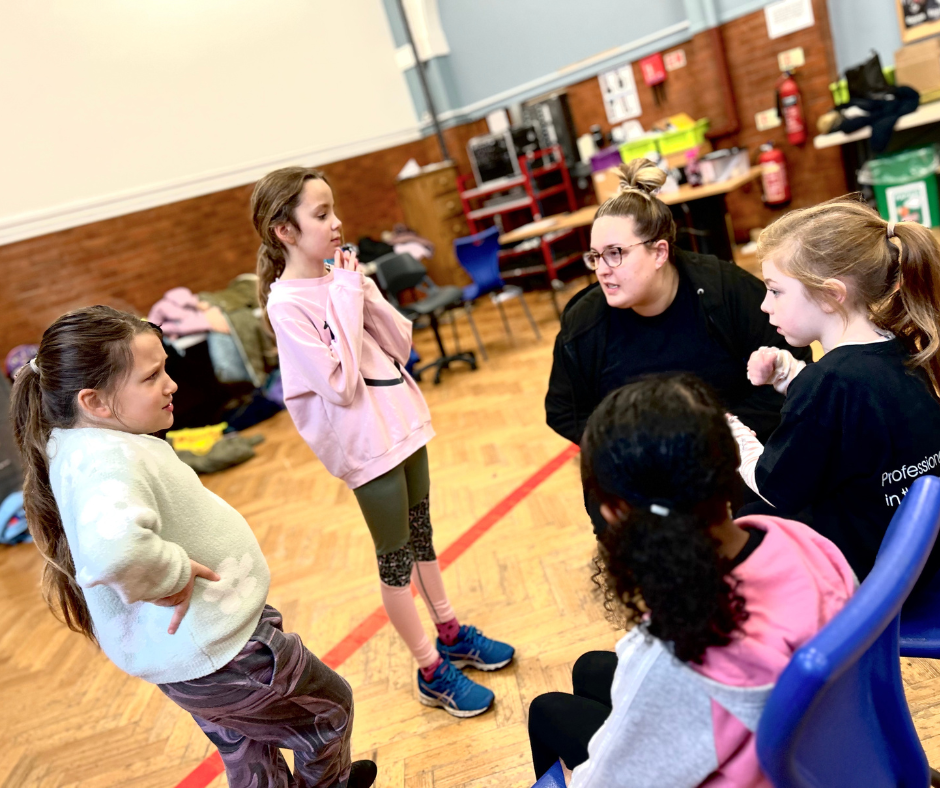
What drama looks like
Drama is often the part parents are most unsure about.
But it’s usually the one children relax into quite quickly.
They might start with a focus game.
Something that gets them thinking and responding.
Then move into short scenes or small group work.
One minute they’re laughing, the next they’re completely focused, working out how a scene fits together.
It’s not about getting it perfect.
It’s about having a go and building from there.
What makes it feel manageable
One of the main things that helps children settle is the way the session is structured.
Everyone starts together in each class.
There’s a clear beginning, middle and end.
Teachers explain things properly.
And children are always working as part of a group.
No one is suddenly asked to do something on their own before they’re ready.
That’s usually what parents are most relieved about.
What parents tend to notice
The changes aren’t usually big or dramatic.
They’re small.
But they matter.
A child talking about someone they met.
Mentioning something they enjoyed.
Joining in a bit more the second week.
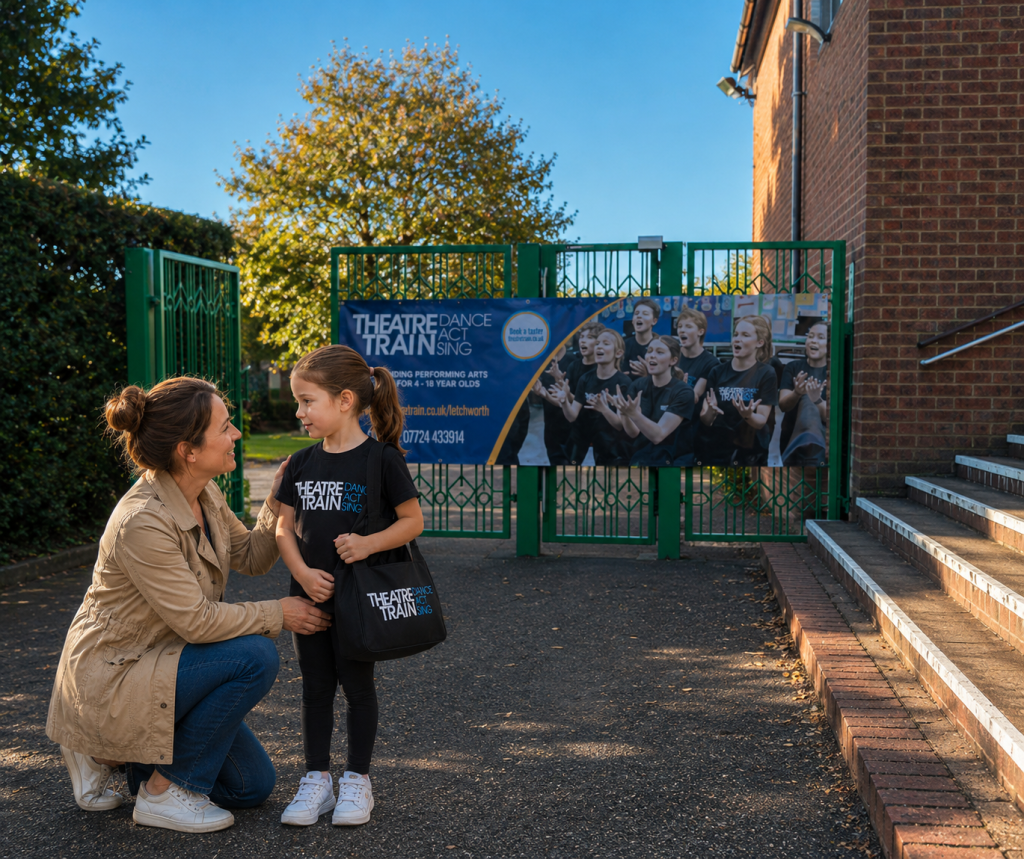
Often it shows up on the way home.
The car journey is usually quite telling.
What it’s really about
Yes, they’re learning singing, dance and drama.
But what you’re really seeing is:
children getting used to trying things
working alongside others
finding their place in a group
Some arrive full of confidence.
Some take a bit longer.
Both are completely normal.
If you’re thinking about trying it
A taster session is just a normal class.
Nothing different.
It’s simply a chance to see how it feels for your child.
To see how they respond.
And to decide from there.
Find out more about our
amazing performing arts classes here
Theatretrain Hitchin
Saturdays
Hitchin Girls School
9.30am-12.30pm
Theatretrain Letchworth
Saturdays
St Christopher’s School
9am-12pm
Theatretrain Stevenage
Saturdays
Marriotts School
1.30pm-4.30pm