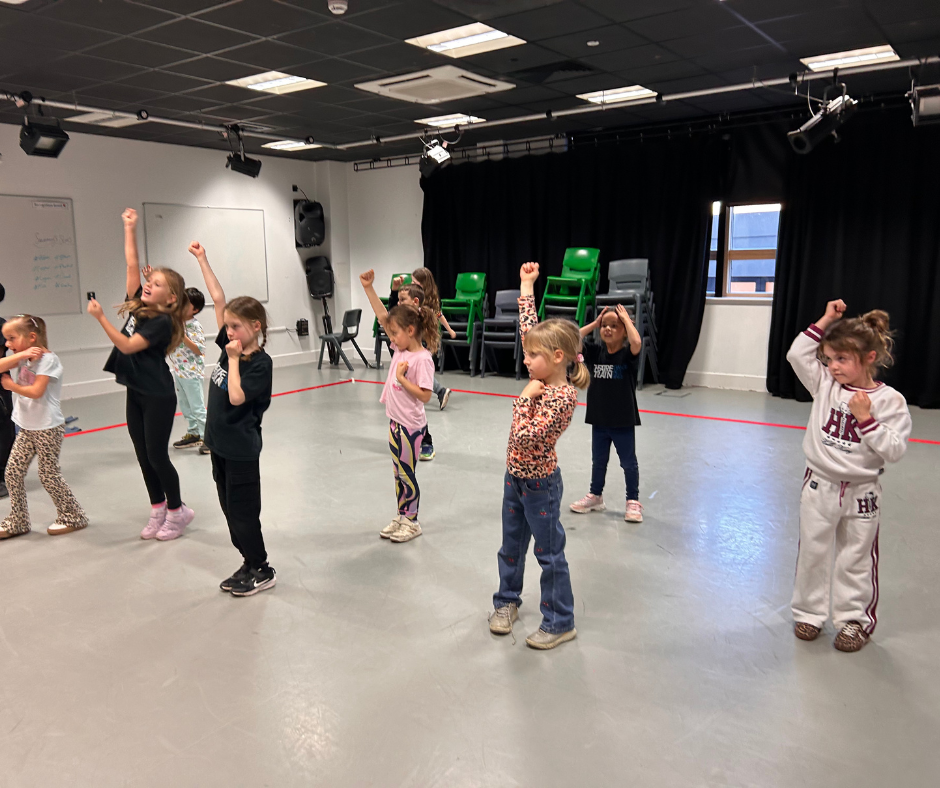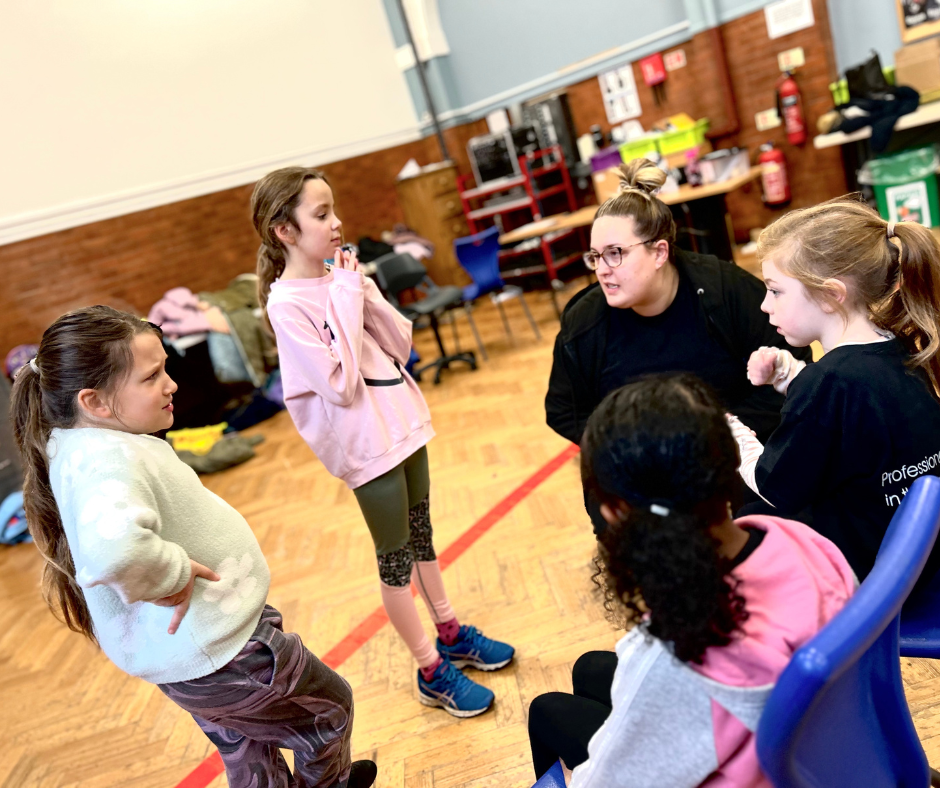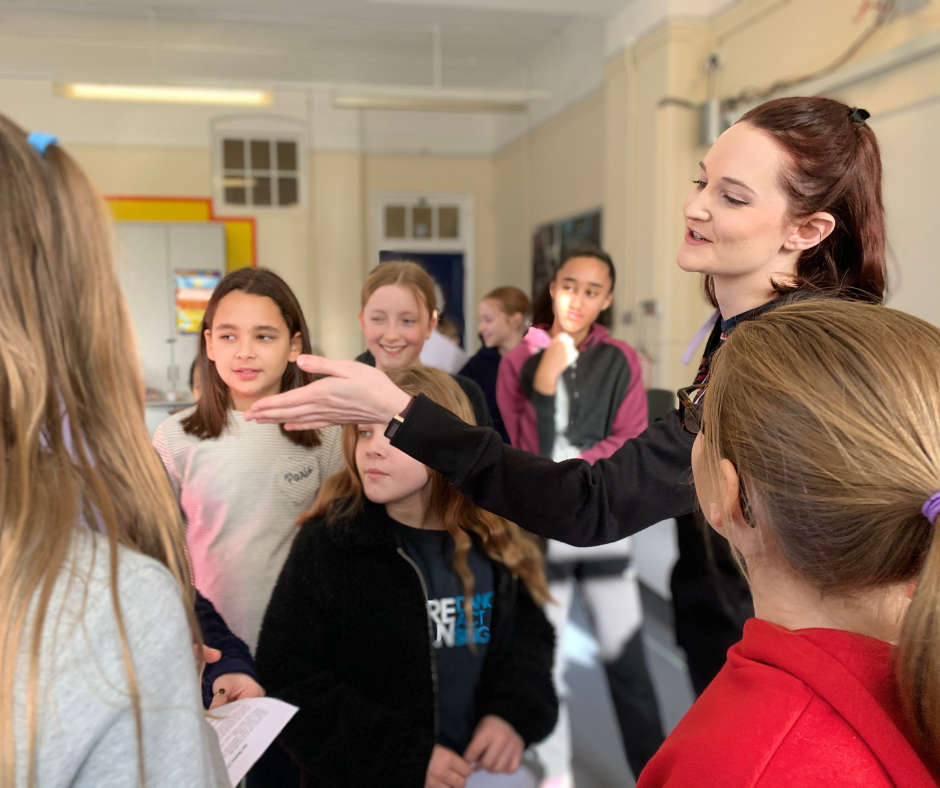
A teacher encouraging a child after making a mistake during a dance class, showing that mistakes are a normal part of learning.
September 7, 2026

How to Help a Child Cope With Making Mistakes

Every child gets things wrong sometimes. The difference isn't whether they make mistakes, it's how they learn to respond to them. Here's one approach that's worked well over the years.

Last term I watched a child make a mistake.

Looking at their face, you would have thought it was the worst thing that had ever happened.

It made me think about something I’ve noticed over the years.

Young children often make mistakes without thinking too much about them.

They sing the wrong words.

Turn the wrong way.

Forget what comes next.

Then they laugh and carry on.

As children get older, something changes.

Many become much more aware of getting things wrong.

Sometimes so aware that they stop themselves from trying in the first place.

One phrase we use a lot

At Theatretrain, there’s a phrase you’ll hear quite often:

“Loud and proud. Strong and wrong.”

It usually gets a smile.

But there’s an important idea behind it.

When you’re learning something new, it’s far better to have a proper go and get it wrong than stay quiet because you’re frightened of making a mistake.

Why?

Because teachers can help children improve what they can see.

If a child sings confidently but misses a note, we can help.

If they perform a dance move with enthusiasm but go the wrong way, we can help.

But if they’re too worried to really try, it’s much harder to support them.

Progress doesn't come from perfection

One thing I’ve learnt over the years is that the children who improve most aren’t usually the ones who never make mistakes.

They’re the ones who keep having another go.

They’re willing to make a mistake, listen, adjust and try again.

Little by little, that’s how confidence grows.

How to help your child cope with mistakes at home

As a parent myself, I know how tempting it is to jump in straight away.

“Don’t worry.”

“It’s okay.”

“Everyone makes mistakes.”

Sometimes those words are exactly what’s needed.

But I’ve also found it helps to notice something else.

The effort.

Instead of saying:

“Well done, you got it right.”

You could try:

  • “I liked how you kept going.”
  • “You didn’t give up.”
  • “That took courage.”
  • “I could see you were trying.”

Those comments tell children that their effort matters, not just the result.

Why this matters

Children who become comfortable making mistakes often become more willing to try new things.

They answer questions.

Volunteer.

Join in.

Not because they suddenly stop making mistakes.

But because they realise mistakes aren’t something to be feared.

They’re simply part of learning.

The thing I've learnt

Confidence doesn’t grow because children get everything right.

It grows because they discover they’ll be okay when they get something wrong.

Sometimes the bravest thing a child can do isn’t performing perfectly.

It’s simply being willing to have a go.

Find out more about our

amazing performing arts classes here

Theatretrain Hitchin

Saturdays 

Hitchin Girls School

9.30am-12.30pm

Theatretrain Letchworth

Saturdays 

St Christopher’s School

9am-12pm

Theatretrain Stevenage

Saturdays 

Marriotts School

1.30pm-4.30pm

Theatretrain, a nationwide provider of weekend theatre schools for young people aged 4-18, specialises in weekly classes in acting, singing, and dancing. An emphasis is placed on learning valuable life skills such as confidence, empathy, courage, and resilience. If you know a child who loves to dance, act and sing or could do with a little confidence boost why not visit to find out what our performing arts classes can offer your child at one of our 80 locations across the UK.

Related Articles

What Are the Pros and Cons of Theatretrain?

What Are the Pros and Cons of Theatretrain?

If you’re thinking about Theatretrain for your child, I could give you a very long list of reasons why I think it’s brilliant. I’ve been part of Theatretrain for years, so obviously I’m not completely neutral! But I also don’t think it’s helpful to pretend there are no downsides. Every children’s activity has things that will suit some families brilliantly and things that won’t work for others. So if you’re trying to decide whether Theatretrain is right for your child, here are what I think are the genuine pros and cons.
Read more >
Is Theatretrain Right for Every Child? 7 Reasons It Might Not Be

Is Theatretrain Right for My Child? 7 Reasons It Might Not Be

I’m going to say something that probably sounds a bit odd coming from someone who runs Theatretrain. Theatretrain is not right for every child. And I think it’s really important to be honest about that. Of course, I want children to come along, enjoy it and hopefully stay with us for years. But I’d much rather tell you that Theatretrain might not be the right fit than persuade you to join and have your child miserable a few weeks later.
Read more >

Performing Arts School vs Dance School: Which Would Suit My Child?

If your child loves performing, you might find yourself choosing between a performing arts school and a dance school. At first glance, they can look quite similar. There may be music. There may be performances. There will probably be lots of energetic children coming out at the end! But the experience your child gets can be quite different. Neither is necessarily better than the other. The important question is: Which one is the better fit for your child?
Read more >
A child standing at the back of a performing arts class before gradually building the confidence to join in.

How Do Children Build Confidence?

Some children stand at the back of the room when they first arrive. They aren't trying to avoid joining in, they're trying to feel safe. The lovely part is watching what happens next.
Read more >