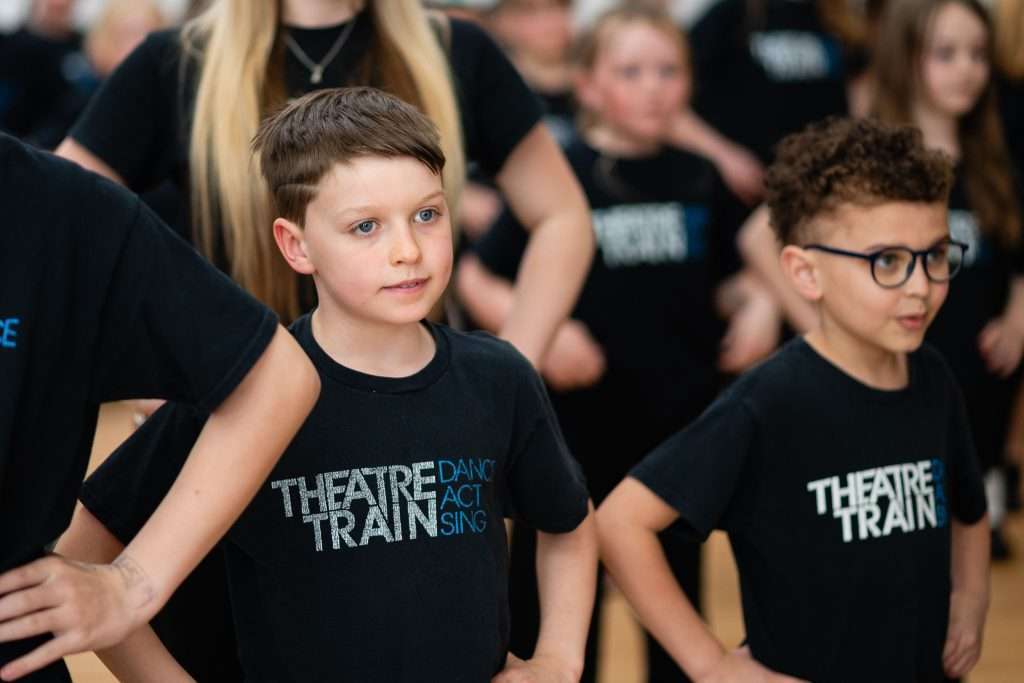
Booking a taster session can feel like a big step.
Even when children are interested, parents often wonder:
What will it actually be like when we arrive?
Will it feel organised or overwhelming?
What happens if my child gets nervous?
Do I stay or leave?
These are completely normal questions. Understanding what to expect often makes the decision much easier.
So here’s an honest walk-through of what a typical Theatretrain taster session looks like, from arrival to the moment you head home.
Arriving: The first five minutes
When families arrive, students gather in our waiting area, usually alongside their parents.
It can feel busy, with lots of children arriving at once, but it’s what I often describe as calm chaos. There’s energy and excitement, but also structure and familiarity for returning students.
You’ll be greeted at the door by one of leadership team (usually myself, Robert or Julie) so you’re not left wondering where to go or what to do next.
Parents are encouraged to stay with their child while everyone arrives. This helps children settle and gives them time to observe the environment before the session begins.
We always start on time.
Once we’re ready, each age group is sent off to their first class:
6–8 years – Dance
9–11 years – Singing
12–18 years -Drama
The order of subjects rotates each week, so every group experiences the morning slightly differently over time.
Registers are taken once students are inside their class, allowing arrivals to feel relaxed rather than rushed.
What children actually do during the session
A Theatretrain Taster session is actually a normal Theatretrain session.
Each session begins with a register and a warm-up designed to help children relax and engage before starting the main activity, whether that’s singing, dance or drama.
Lessons are planned and prepared by our teachers, so children are guided step-by-step rather than expected to know what to do.
Across the session, students rotate through three subjects:
singing
dance
drama
After the first hour, groups move rooms to their next class.
During the final ten minutes of that 2nd hour, we have a short break. Sometimes the whole centre comes together; other times children stay within their age groups.
Break time often becomes a natural social moment where children begin chatting and recognising familiar faces.
After the break, students move to their final session.
Occasionally, groups come together at the end to share what they’ve been working on, a celebration of effort and creativity rather than performance.
What happens if a child feels nervous
This is one of the biggest concerns parents have and it’s something we’re very used to supporting.
If a child feels unsure or clings to their parent at the start, one of the leadership team (either myself, Robert or Julie) stays with them while teachers begin the lesson.
The most important message children receive is:
There is no pressure to take part straight away.
They’re welcome to sit at the back with me and watch until they feel ready.
Often, simply observing helps children realise the environment feels safe.
If needed, a parent can walk their child to the room and stay briefly (usually no more than five minutes) just long enough to help them settle.
(We’ve learned over the years that when parents stay longer, children tend to remain focused on the parent rather than engaging with the group.)
If a child still feels overwhelmed, we step out together and talk honestly about whether they’re ready that day. Sometimes we rearrange another taster and offer a short tour of the venue so everything feels more familiar next time.
There’s no pressure to push through if a child isn’t ready yet.
What parents do during the session
Most parents choose to drop off and return at the end of the session.
We keep contact details for all families in case we need to reach you, so parents can leave confidently.
However, we do have a waiting area, and parents are very welcome to stay if they prefer.
There’s no expectation either way, it’s about what feels comfortable for you and your child.
How the session ends
The end of the session is often when parents get their first real insight into how their child experienced the morning.
Where possible, we show parents a short video clip of their child participating during the session. Many families really appreciate seeing their child engaged when they weren’t there to watch.
If a video isn’t available that day, we always make time to speak with parents directly and share how their child got on.
On the following Monday, I send a follow-up email so families have space to reflect and ask questions before deciding next steps.
Parents also receive a simple next-steps card outlining:
fees for the remainder of the term
how to sign up
practical information to review at home
There’s no pressure to decide immediately, it’s just clear information when you’re ready.
What children and parents usually say afterwards
The most common thing children say?
“Can I come back next week?”
And the most frequent parent comment is:
“Thank you for the video – I really appreciated seeing them.”
Often the biggest surprise for parents is how quickly their child settles once they’re inside the session.
What a taster session is really for
A taster session isn’t about judging performance or testing ability.
As I often explain:
A taster session works best when parents see it as an opportunity to see if Theatretrain is right for their child.
It’s simply a chance to experience the environment, meet the teachers and see how your child feels being part of the group.
Around 60% of children who attend a taster choose to join, but the most important outcome is clarity. Knowing whether it feels like the right fit.
If you’re thinking about trying a session
It’s completely normal to feel unsure before trying something new.
Understanding what to expect removes much of the uncertainty, both for parents and children.
A taster simply allows you to see Theatretrain in action and decide from experience rather than guesswork.
Find out more about our
amazing performing arts classes here
Theatretrain Leicester
Saturdays
Brockington College
10am-1pm