If your child’s development is a canvas, are you painting with all the colours?
Have you ever wondered how a single person could excel in so many fields? Meet Leonardo da Vinci, the ultimate Renaissance man. Picture this: a young Leonardo, curious and imaginative, diving into the worlds of art and science with equal passion. It wasn’t just about painting Mona Lisa’s enigmatic smile or sketching the intricate details of The Last Supper; Leonardo’s genius extended far beyond the canvas.
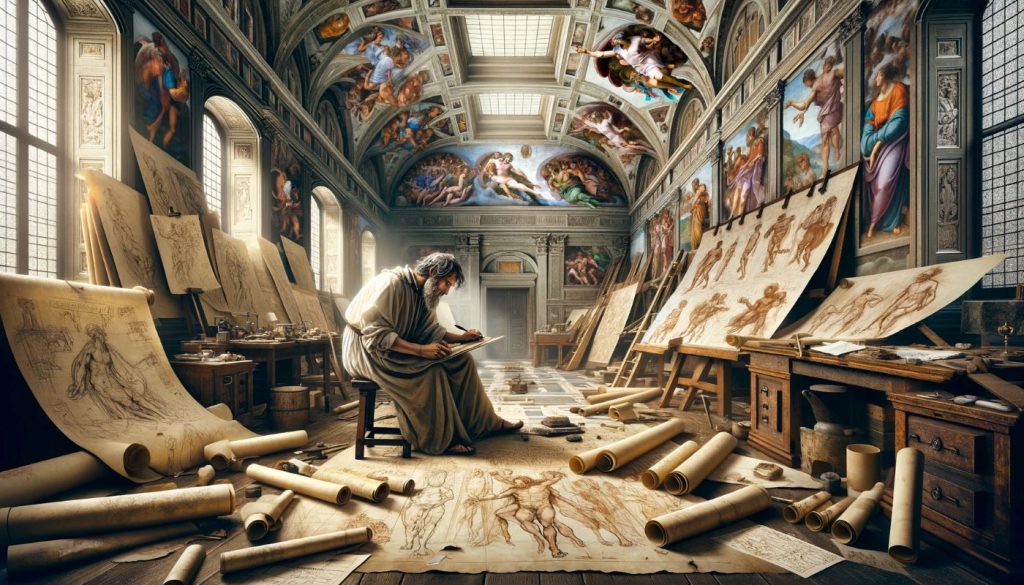
Imagine Leonardo in his cluttered workshop, surrounded by sketches of human anatomy, designs for flying machines, and detailed studies of water flow. One moment, he’s perfecting the delicate shading in a portrait, and the next, he’s scribbling notes on the mechanics of bird flight, trying to unlock the secrets of human-powered aviation. He even dissected corpses (yes, really!) to understand muscles and bones better, merging his artistic eye with scientific precision.
What’s truly fascinating is how Leonardo’s artistic skills enhanced his scientific insights. His keen observation as an artist allowed him to notice things others might overlook. For instance, his study of light and shadow in painting helped him understand optics and how the eye perceives depth and perspective. This cross-pollination of skills led to revolutionary ideas in both fields.
Leonardo’s notebooks, filled with mirrored handwriting (a quirk to keep his ideas secret!), reveal a mind constantly at play. He doodled, hypothesised, and experimented, embodying a childlike curiosity throughout his life. One day, he’d be sketching a detailed study of the human heart; the next, he’d be designing a robotic knight or conceptualising a helicopter centuries ahead of its time. His ability to blend creativity with analytical thinking was his superpower.
The twist? Despite his brilliance, Leonardo left many projects unfinished. He was a notorious procrastinator, often jumping from one idea to the next. But this, too, was part of his genius. His restless mind, always seeking new challenges, exemplifies how the fusion of artistic and scientific pursuits can lead to extraordinary innovation.
So, next time you encourage your child to paint, dance, or play an instrument, remember Leonardo da Vinci. Their artistic hobbies might just spark a revolutionary idea or lead to an unexpected breakthrough in ways you’d never imagine. Creativity and curiosity, hand in hand, can truly change the world.
Isn’t it amazing how Leonardo’s blend of art and science fuelled his genius? It’s a reminder that sometimes, the things we consider “extracurricular” are actually central to our development. As parents, we often emphasise academic achievements, but what if the key to unlocking our children’s full potential lies in encouraging their creative pursuits as well?
Here’s the thing: creative pursuits are just as important as academics for children’s development. Engaging in activities like painting, playing an instrument, or dancing doesn’t just provide a fun break from schoolwork; it enhances cognitive abilities, problem-solving skills, and even emotional intelligence. Think about it – when your child is learning to play the piano, they’re not just mastering music; they’re improving their memory, discipline, and ability to focus.
Studies have shown that children who participate in the arts perform better academically. This might seem counterintuitive at first, but it makes perfect sense. The arts encourage children to think outside the box, approach problems from different angles, and develop a resilience that’s invaluable in all areas of life. Whether it’s the patience required to perfect a dance routine or the creativity needed to paint a landscape, these skills translate into better performance in the classroom and beyond.
So next time your child wants to spend time drawing or practising their violin, remember Leonardo da Vinci. Encourage their passions and interests, knowing that you’re not just nurturing an artist, but also a thinker, a problem solver, and a well-rounded individual. After all, creativity and curiosity are powerful tools that can truly shape their future.
Speaking of nurturing creativity and curiosity, have you ever thought about giving your child a more structured outlet for their artistic interests? Sometimes, finding the right programme can make all the difference in how effectively these skills develop. That’s where specialised training comes into play, providing not just a space to explore, but also expert guidance to truly flourish.