Choosing the right performing arts classes for your child can feel like a big decision. Whether they already dream of performing on stage or simply love to sing, dance, act and express themselves creatively, the environment in which they train can have an enormous impact on their development.
There are several options when looking for performing arts classes for children in Basingstoke, so how do you decide which is right for your child?
As someone who has trained professionally and performed both internationally and in London’s West End, I believe excellent performing arts training for young people should be about much more than learning a song, a dance routine or a script. It should develop technique, confidence, creativity, discipline and a genuine understanding of performance — while still being somewhere children look forward to attending every week.
1. Look for high-quality training across all three disciplines
A strong performing arts programme should give children the opportunity to develop in singing, dancing and acting.
It can be tempting for a young performer to concentrate on the discipline they already enjoy most. However, developing all three skills can create a far more versatile and confident performer.
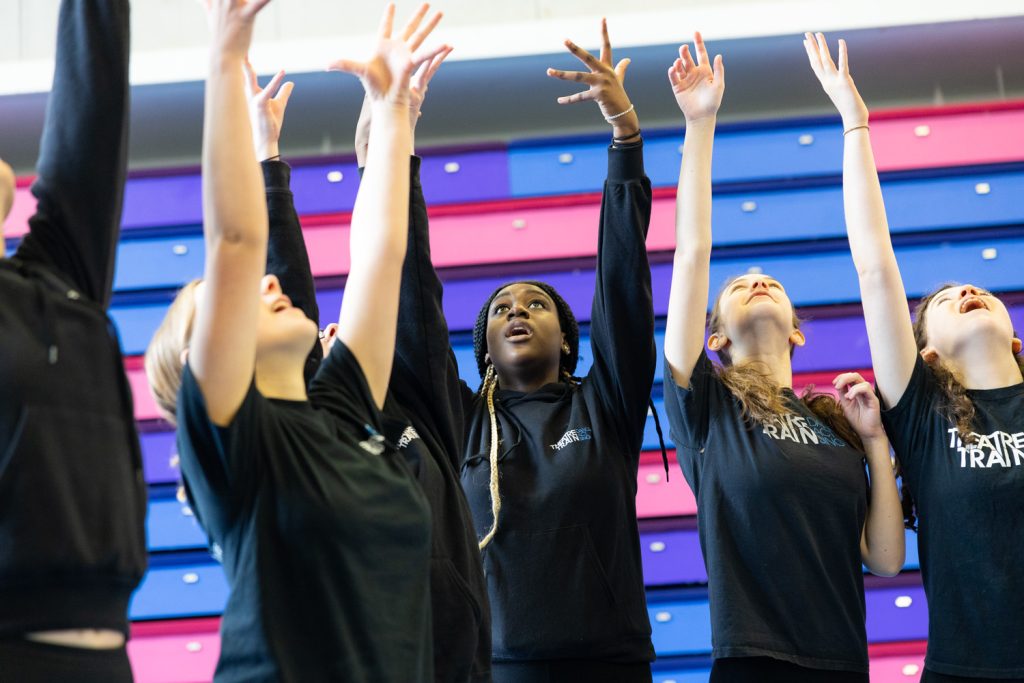
At Theatretrain Basingstoke, our Main Company students receive three hours of weekly training, covering singing, dance and acting. Students work in age-appropriate groups so their training can develop as they grow.
Why does this matter?
Musical theatre requires performers to combine disciplines. A child may need to sing confidently whilst performing choreography, tell a story through movement or remain completely believable as a character whilst singing.
Giving young performers a broad foundation allows them to discover their individual strengths while continuing to develop areas they may initially find more challenging.
2. Find teachers who understand performance as well as teaching
The quality of the teacher makes an enormous difference. Look for classes where young people are learning from teachers who understand their discipline and know how to communicate that knowledge effectively to children.
Professional training doesn’t mean that classes need to feel intimidating or overly serious. In fact, children often learn best when they feel secure enough to experiment, make mistakes and try again.
Professional standards in a supportive environment
The ideal environment combines high expectations with encouragement. Young performers should be challenged appropriately, but they should also feel valued as individuals.
At Theatretrain Basingstoke, creating that balance is extremely important. Classes should help students develop strong performance skills whilst keeping creativity, enjoyment and confidence at the heart of their training.
3. Consider the performance opportunities
Performing arts training shouldn’t exist entirely inside the rehearsal room. There is an enormous difference between practising performance skills and actually using them in front of an audience.
Performing teaches children things that are difficult to recreate in a weekly class: managing nerves, adapting when something unexpected happens, working as an ensemble and experiencing the excitement and responsibility of being part of a production.
From training to the stage
When comparing theatre schools in Basingstoke, ask what genuine performance opportunities students receive.
At Theatretrain, performance is an important part of our training. Students have opportunities to take part in productions, including large-scale Theatretrain performances at major venues such as the Royal Albert Hall and theatres in London’s West End.
For a young performer, experiences like these can be unforgettable — but importantly, they also give purpose to the skills developed week after week in class.
4. Look beyond performance skills
Not every child who attends performing arts classes wants to become a professional performer — and they don’t need to. Quality theatre training can develop skills that extend far beyond the stage.
Children learn to communicate, listen, collaborate, accept direction, use their imagination and express themselves in front of other people.
Confidence that goes beyond the stage
One of the most rewarding things about working with young performers is watching confidence develop. Sometimes that means seeing a naturally outgoing child become a more disciplined and thoughtful performer. At other times, it’s watching a quieter child gradually find the confidence to contribute, perform and allow their personality to shine.
The goal shouldn’t be to make every child the same type of performer. Great training should help each child discover what they are capable of.
5. Choose somewhere your child can progress
Children’s needs change enormously as they grow. The class that is perfect for a four-year-old taking their first steps into performing arts will not provide the same challenge needed by a committed teenager.
Look for a performing arts school that offers opportunities for progression.
At Theatretrain Basingstoke, children can begin with our Minis programme, which introduces younger children to singing, dancing, acting, imagination and stagecraft. Our Main Company provides training for ages 6–18, while additional advanced training is available for young performers wanting to push their skills further.
That progression is important because it allows training to grow with the performer.
6. Most importantly — does your child love being there?
This is perhaps the most important question of all. Excellent training should challenge young people, but children also need to love performing.
They should leave a session feeling energised, inspired and excited about what they’re going to learn next. Friendships, teamwork and a sense of belonging are an enormous part of performing arts. A supportive company allows young people to be creative without worrying about getting everything right immediately.
That’s often when some of their biggest breakthroughs happen.
Finding the right performing arts classes in Basingstoke
Ultimately, the best performing arts class is one that suits your child. Look beyond the timetable and ask about the training, teachers, progression and performance opportunities. Most importantly, consider the environment your child will be joining.
At Theatretrain Basingstoke, our aim is to combine professional performing arts training with an encouraging environment where young people can develop their singing, dancing and acting, build confidence, make friends and experience the excitement of performing.
And sometimes the easiest way to know whether somewhere is right is simply to experience it. If your child loves performing and you’d like to discover what Theatretrain Basingstoke has to offer, come along and experience a session for yourself.