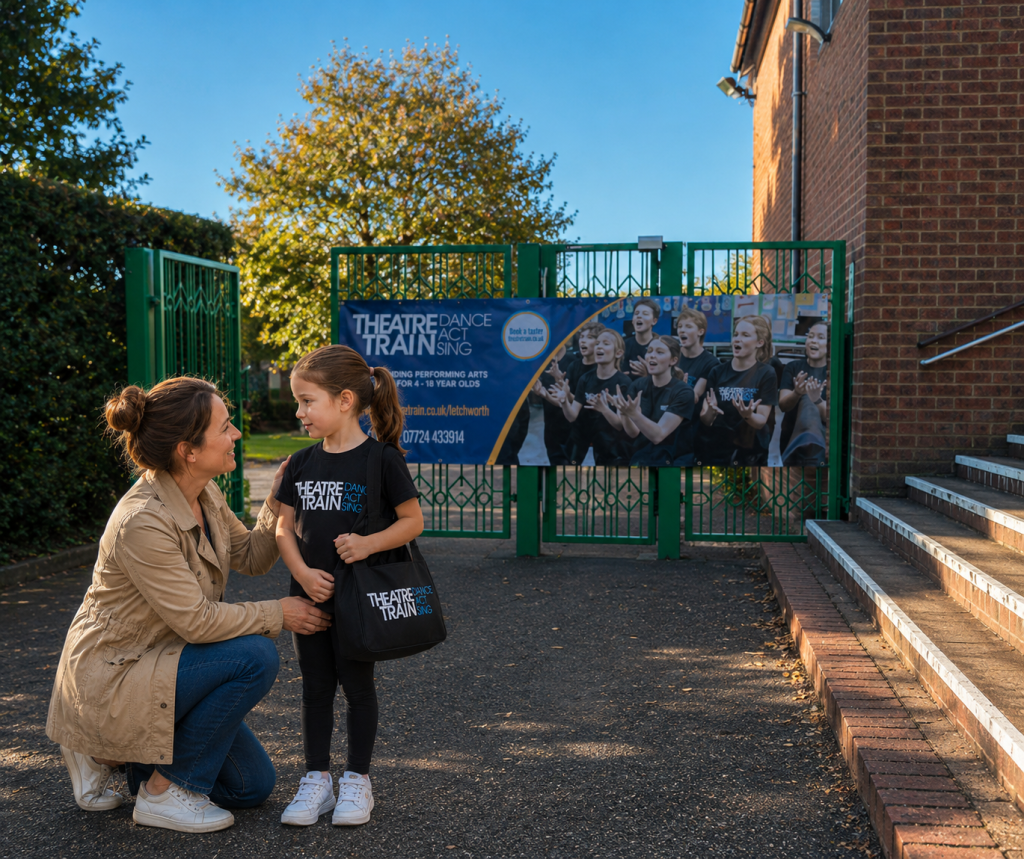
If your child won’t join in at drama class, it can be difficult to know whether they’re nervous, unsure or simply need a little more time.
This is one of those questions that doesn’t always get asked directly.
Usually it sounds more like:
“My child is quite shy.”
“They don’t always join in straight away.”
“I’m just not sure how they’ll be.”
But what parents often mean is:
“What happens if they freeze?”
Because no one wants to picture their child standing in the middle of a room, unsure what to do, while everyone else gets on with it.
The good news?
We see children like this every term.
And it’s usually not the problem parents imagine it will be.
What Actually Happens In That Moment?
Last term, we had a child arrive for a taster session who spent the first few minutes standing near the door.
They weren’t upset.
They weren’t crying.
They just weren’t ready to join in yet.
So we didn’t force the issue.
We chatted.
They watched.
One of our Welcome Ambassadors stayed nearby.
The class carried on around them.
A few minutes later they moved a little closer.
A little while after that they joined in one activity.
By the end of the session they were taking part in everything.
That’s often how it happens.
What Happens If A Child Hangs Back?
From time to time, there are children who take a bit longer to feel comfortable.
They might:
- stay close to the door
- watch before joining in
- stand near a teacher
- stay close to their Welcome Ambassador
That’s completely normal.
What matters is what happens next.
We don’t leave children to figure it out on their own.
Our team notices quickly and responds.
Sometimes that means introducing them to a Welcome Ambassador.
Sometimes it means giving them a simple task so they feel included without pressure.
Sometimes it means letting them watch for a while first.
The goal is to help them feel safe enough to join in when they’re ready.
Not Joining In Straight Away Doesn't Mean It's Not Working
This is the bit that’s easy to misunderstand.
From the outside, it can look like:
“They’re not enjoying it.”
But often what’s really happening is:
“They’re taking it in.”
Some children need to:
- watch first
- understand what’s happening
- work out who everyone is
- feel safe before stepping forward
Once they’ve done that, joining in often feels much more natural.
What Usually Changes?
Sometimes it happens within minutes.
You’ll notice:
- a small smile
- moving closer to the group
- joining one activity
- talking to another child
Other times it takes a couple of weeks.
That’s normal too.
One of the things we look for isn’t:
“Are they joining in perfectly?”
It’s:
“Are they a little more comfortable than they were last time?”
That’s usually where the real progress sits.
What We Don't Do
We don’t:
- put children on the spot
- force them to perform on their own
- pressure them before they’re ready
- make a big deal out of it
Because that’s often what creates the exact situation parents are worried about in the first place.
Children settle best when they feel supported, not pushed.
The Role Of Our Welcome Ambassadors
Every new child is introduced to one of our Welcome Ambassadors.
Their job is to:
- Welcome new students.
- Walk with them so they’re not on their own.
- Work with them so they know what to do.
- Watch for them and make sure they’re happy.
It’s a simple system, but it makes a huge difference.
Particularly for children who need a little extra time to settle.
What Parents Often Notice Afterwards
Interestingly, it’s not always obvious in the room.
But later, parents often tell us things like:
“They’ve been talking about it all week.”
“They can’t wait to come back.”
“They recognised someone the second week.”
“They’ve been practising at home.”
Those small signs often tell you far more than what happened in the first five minutes.
Frequently Asked Questions
What if my child watches the whole session?
That’s okay.
Sometimes children need longer to feel comfortable.
Watching is often part of the process, not a sign that something has gone wrong.
How long does it take children to settle?
Every child is different.
Some settle within minutes.
Others take a few sessions.
What we’re looking for is gradual progress, not instant confidence.
Will teachers encourage them to join in?
Absolutely.
But encouragement and pressure are not the same thing.
We encourage children to take small steps when they’re ready.
Does watching count as taking part?
Often, yes.
Children learn a huge amount by observing.
Sometimes watching is the first step towards joining in.
If You're Unsure
The best way to understand how your child responds is simply to let them try it.
A taster session isn’t about getting everything right on day one.
It’s about seeing how they feel.
How they settle.
And what happens once they realise they’re safe.
Most parents don’t decide based on the first five minutes.
They decide based on how their child feels afterwards.