One of the most common things parents say to me before booking a first session is:
“My child would love this… but they’re quite shy.”
It’s usually said a bit cautiously. Like they’re trying to work out if that rules it out before they’ve even started.
And I understand why.
A new place, new people, not knowing where to stand or what’s expected… that’s a lot for any child. Especially one who takes a bit longer to feel comfortable.
So it’s probably more helpful if I just show you what actually happens when a shy child comes through the door.
What it looks like at the start
On a Saturday, there’s always a mix of children arriving.
Some walk straight in chatting.
Some stay very close to their parent.
Some are excited in the car… and then go very quiet when they get to the door.
All of that is completely normal.
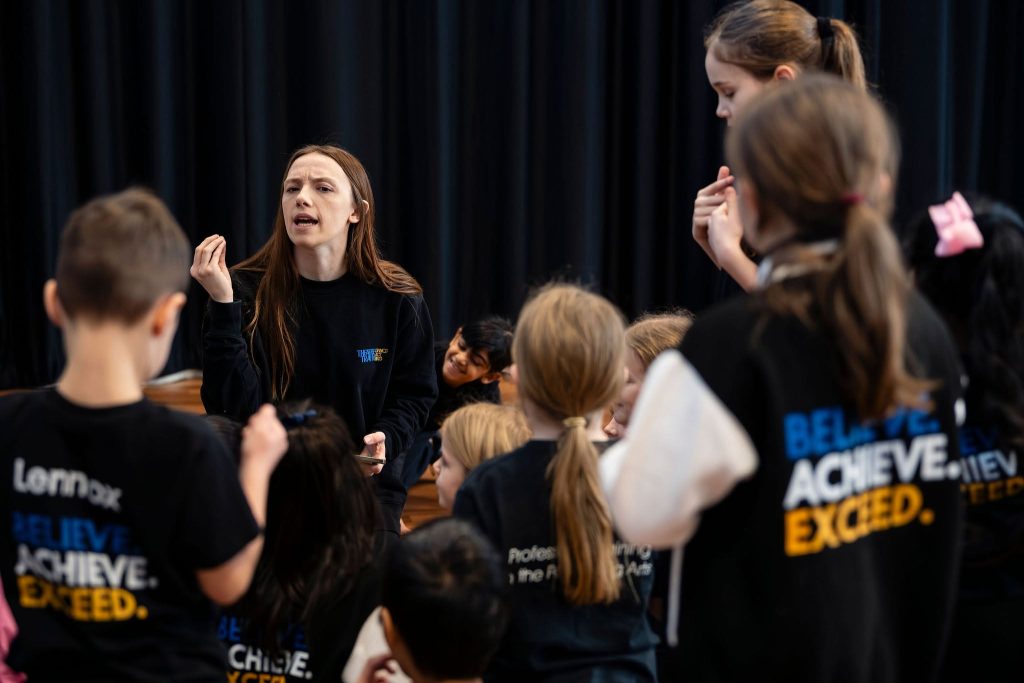
When a new child arrives, they’re greeted by name and introduced to one of our Welcome Ambassadors. That’s an existing student whose job is to stay with them at the start, show them where to go and introduce them to the group.
They wear a lanyard, so it’s really clear:
this is the person who’s here to look after me.
That one small thing makes a big difference.
The first few minutes
Same structure each week.
Same kind of warm-up.
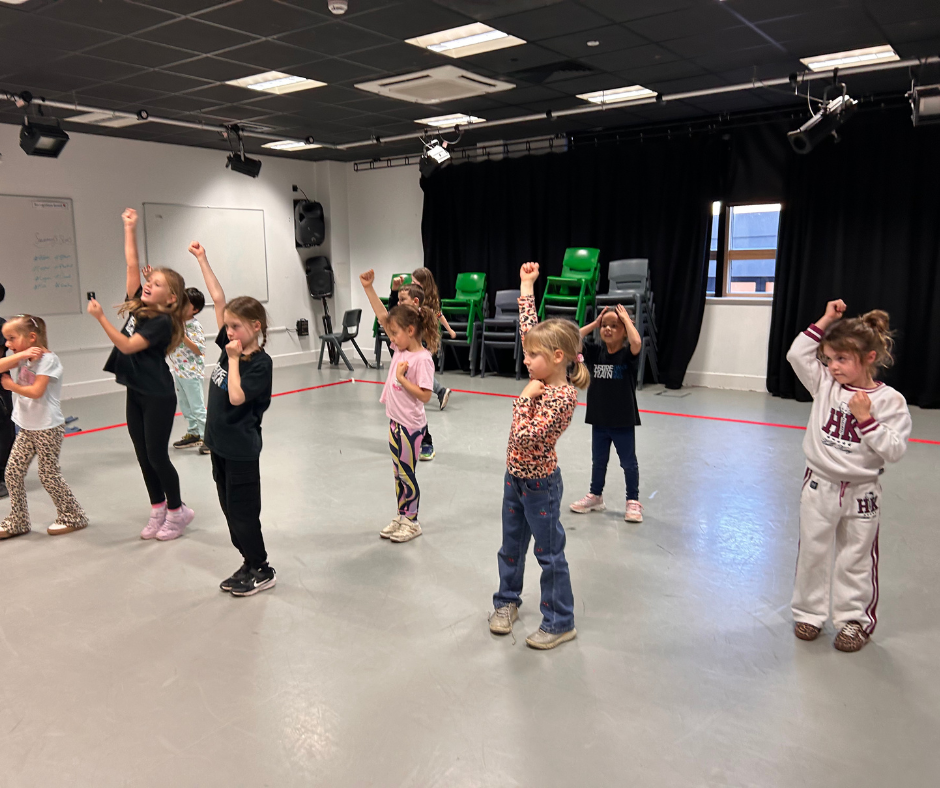
Everyone joining in at the same time.
That consistency helps more than people realise.
A new child doesn’t have to work out what’s happening or where they should be. They can just watch for a moment if they need to, and then join in when they’re ready.
Most do.
Usually within five or ten minutes, once the focus moves away from “being new”, you can see them start to relax.
What we don’t do
This is often what parents are really worried about.
They imagine their child being put on the spot.
Asked to perform on their own.
Expected to speak in front of everyone straight away.
That doesn’t happen.
Everything is done as a group to start with.
Teachers mix children naturally through pair work and small groups so no one feels singled out.
There’s no moment where a child has to “prove themselves”.
They’re just part of it.
What actually changes (and when)
Parents often expect to see everything click straight away.
Sometimes it does.
Often it doesn’t – and that’s completely fine.
What we usually see is much quieter than that.
Week one:
They might stay close to the person they came in with.
They join in a bit, watch a bit.
Week two:
They start recognising faces.
They join in more without being prompted.
Week three or four:
They walk in knowing where they’re going.
They’ve got one or two children they naturally stand next to.
They answer questions without needing encouragement.
Nothing dramatic.
Just small shifts that add up.
One example (that we see versions of all the time)
We had a student join who loved performing at home but was very unsure about coming in.
On her first session, she didn’t join in at all. She chose to sit and watch.
So that’s what we let her do.
We chatted a bit. No pressure.
She came back the following week and started joining in from the back.
By week three, she told me she’d joined in with everything.
By week four, she had made friends and was chatting as she moved between classes.
Nothing changed about her ability.
She just needed time to feel comfortable.
The bit that sometimes gets missed
The children who don’t continue are rarely the ones who can’t do it.
They’re usually the ones who didn’t get long enough to settle.
If a child hasn’t made a friend after one session, it’s easy to assume it’s not for them.
But most friendships don’t happen in a single session.
For a lot of children, the hardest part is just coming back the second time.
That’s usually when things start to feel familiar.
Do shy children enjoy it?
Very often, yes.
Some of the quietest children in the room end up being the most focused, the most thoughtful, and the ones who really grow over time.
They’re given space to take part in their own way.
And once they realise they don’t have to be the loudest or the most confident to belong, they settle in properly.
It’s not just younger children
We see this with all ages.
Four-year-olds who need a bit of reassurance walking in.
Teenagers who take a few weeks to find their place.
There isn’t a point where a child suddenly becomes “ready”.
Sometimes joining is the thing that helps them get there.
If you’re unsure
Most parents don’t decide straight away.
They watch, they read, they think about it.
Especially if their child is on the quieter side.
A taster session is just a normal class.
There’s no expectation to be confident.
No pressure to join in straight away.
Just a chance to see how it feels.
And for most children, once they realise what the environment is actually like…
they’re absolutely fine.
Find out more about our
amazing performing arts classes here
Theatretrain Hitchin
Saturdays
Hitchin Girls School
9.30am-12.30pm
Theatretrain Letchworth
Saturdays
St Christopher’s School
9am-12pm
Theatretrain Stevenage
Saturdays
Marriotts School
1.30pm-4.30pm
Theatretrain Leicester
Saturdays
Brockington College
10am-1pm