1989 was a momentous year in Europe. It ended with Eastern European countries leaving the grip of the Soviet Union and the fall of the Berlin Wall.
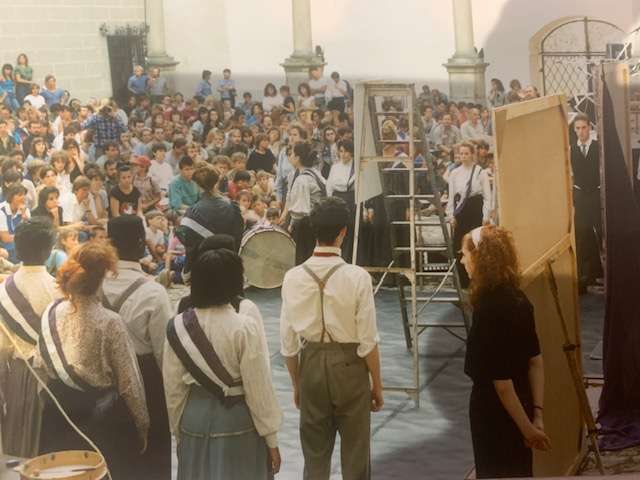
That year, I happened to make my first youth theatre exchange. A group from a town called Trebic in the Czech Republic came to London by bus, and my youth theatre hosted them. We had a lot of fun. We watched their joyous play, worked together, went sightseeing and found out all about them. Then in July, it was time for our group of 18-year-olds to travel there, and we went on a London school bus. Light blue in colour with very hard seats.
Reaching the Soviet border was tricky, as one of our group was from Vietnam and had a stateless passport, so Austria wouldn’t let us in. We instead found another route to the then Czechoslovakia. The difference was amazing. We kept seeing soldiers in groups of two patrolling the woods and fields. There was plenty of barbed wire, but the houses and buildings were so run-down. At one point, we all had to get off the bus while they checked everything in minute detail. Eventually, they let us continue to the town. It was so different to home. Big banners stretched over roads with slogans on them. Loudspeakers on lampposts and huge pictures of the local mayor and important people.
One of our group was Catherine Tate. We were taking a play about the suffragettes, and Catherine played Mrs Pankhurst, speaking one long speech in Czech.
We were hosted magnificently, and their group were utterly charming. For one thing, they could sing songs together all day long. We had a lot of adventures, some of which I have written about before. I was interviewed on Czech TV after one of our performances. They asked me why we performed such a play, and something made me say that every country had to struggle for its freedom. Little did I know that 6 months later, when the revolution happened, and 300,000 people went into Prague’s Wenceslas Square, the communist party pulled the plug on the TV. Then it jumped back on, and there was yours truly talking about freedom.
But most of all, I made a lifelong friend. Jaroslav Dejl was the leader of their theatre group, and as our coach pulled away to make the 18-hour return journey, we caught each other’s eyes. Something told me we would meet again. And so it has proved with our families meeting together and holidaying, and all these years later, still talking about theatre even though we don’t speak each other’s language. It’s been an important thread in my life. We come from opposite ends of Europe, but we share a similar understanding of the world.