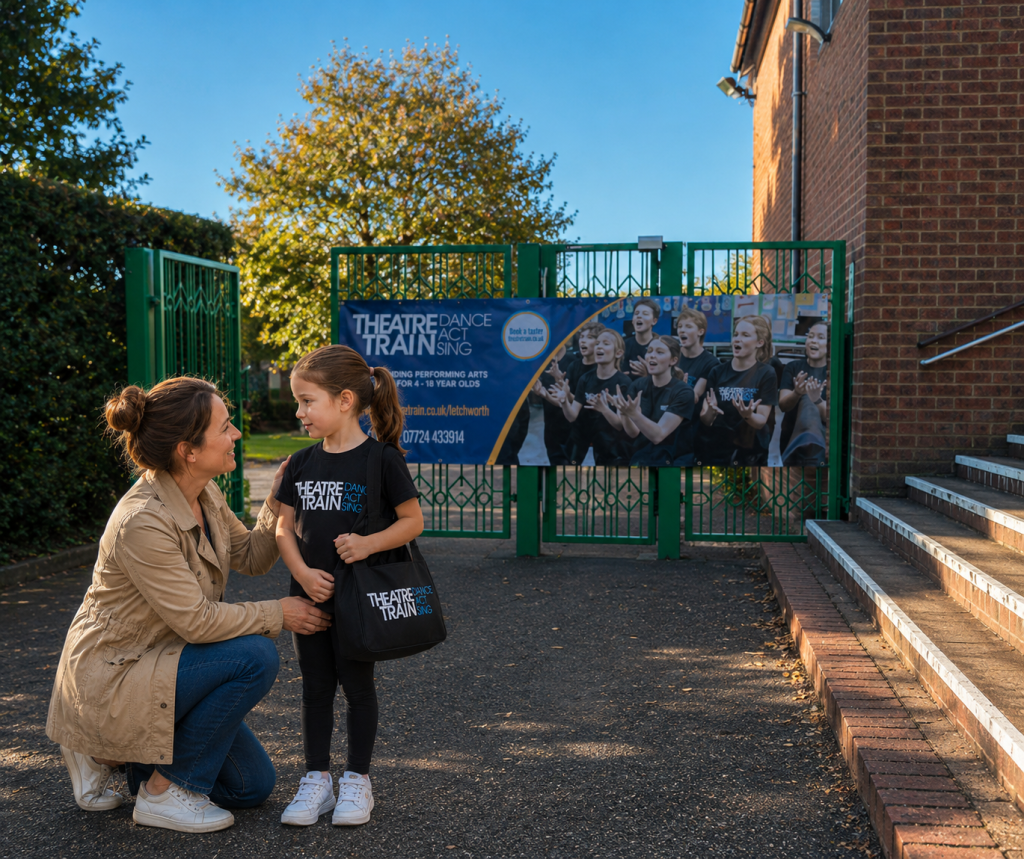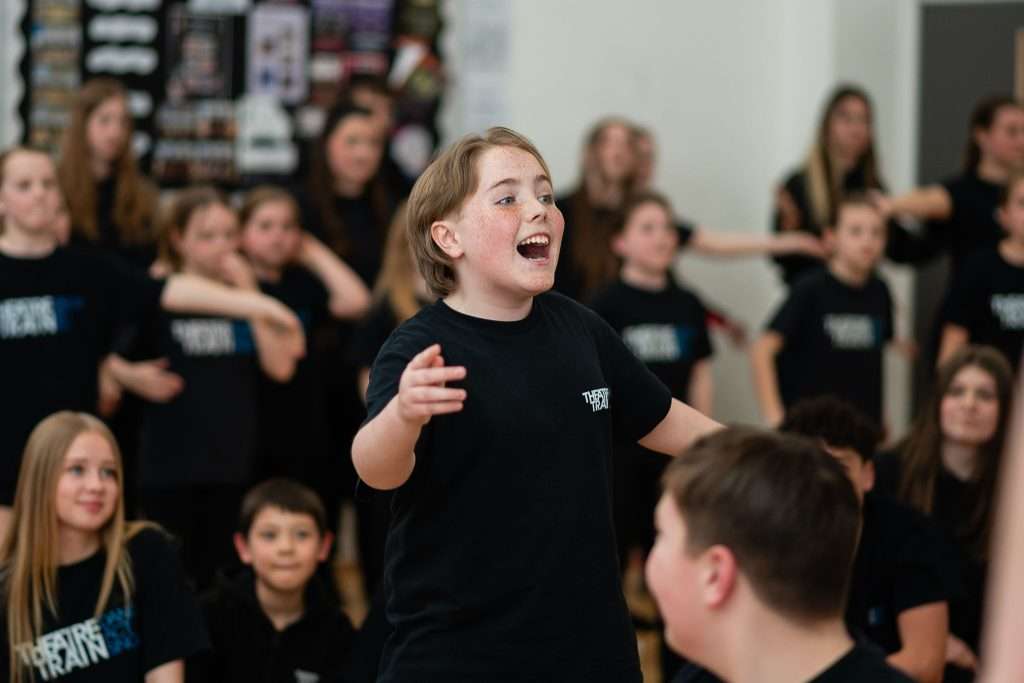
Because here, a singing class is never just about singing. A dance class is more than learning steps. And drama is not simply memorising lines.
Everything we do is about creating theatre, bringing stories to life in a way that’s fun, imaginative, and confidence-building.
Since my own background is in singing, I want to show you how we make it work differently at Theatretrain.
Warming up (without the yawns)
We always start with a vocal warm-up, but you won’t find endless scales in my classroom. While I appreciate their value, they can feel repetitive and uninspiring, especially for younger children.
Instead, I use playful vocal games that sneak in technique while keeping everyone engaged. “Bumble Bee Tuna” is one of our favourites, it gets voices moving, minds switched on, and fills the room with laughter.
Starting with fun is important. It relaxes the children and helps them feel ready to perform.
Jumping straight to the fun bit
When we begin a new song, I start with the chorus. It’s usually the catchiest part, and because it repeats throughout, the children quickly feel a sense of achievement. Within minutes, they can sing half the song with confidence. That instant progress builds energy and excitement in the room.
Giving the song a story
But singing isn’t just about notes and words. To make it theatre, we need to give it context.
So I ask:
Where is this song happening?
What are we doing while we sing it?
Why are we singing it?
The children decide the answers, and their ideas are always brilliant. Suddenly, the song has a world around it. And once they’ve imagined that world, we can take the next step: “Let’s get it on its feet.”What does “getting it on its feet” mean?
In theatre, this phrase means moving from the script to staging it in the space. And that’s exactly what we do.
Each week, our classrooms are marked out with ribbons to show the stage area. It might sound simple, but it changes the whole atmosphere. The children are no longer just standing in a room, they’re performing on a stage.
Bringing the song to life
This is where the magic happens. Together, we explore:
Where should we stand?
How should we move?
How does the music make us feel?
I always encourage the children’s input, their ideas are often more inventive than mine! Because they’ve helped to shape it, they feel a real sense of ownership and pride in the performance.
Once the chorus is alive on its feet, we tackle the verses. Even if the tune is the same, the words change the meaning. We discuss how movement, expression, and staging can shift to reflect those new lyrics. This helps them understand storytelling through song, which is at the heart of performing arts.
The bigger picture
By the end of a singing session, we might not have sung the whole piece from start to finish. And that’s absolutely fine. Because the goal isn’t to “get through the song.” The goal is to create theatre.
Every class helps children stretch their imaginations, work as a team, connect movement and voice, and build confidence in their creativity. And most importantly they have fun while doing it.
What this means for your child
So if you’re wondering what makes a Theatretrain singing class different, the answer is this: we don’t just teach children to sing, we teach them to perform.
They’ll laugh, learn, and come away not only with a song in their head but with a sense of achievement, new ideas, and the confidence to bring a piece of theatre to life.
That’s the Theatretrain way. And it’s why our classes stick with children long after the last note is sung.
Find out more about our
amazing performing arts classes here
Theatretrain Hitchin
Saturdays
Hitchin Girls School
9.30am-12.30pm
Theatretrain Letchworth
Saturdays
St Christopher’s School
9am-12pm
Theatretrain Stevenage
Saturdays
Marriotts School
1.30pm-4.30pm