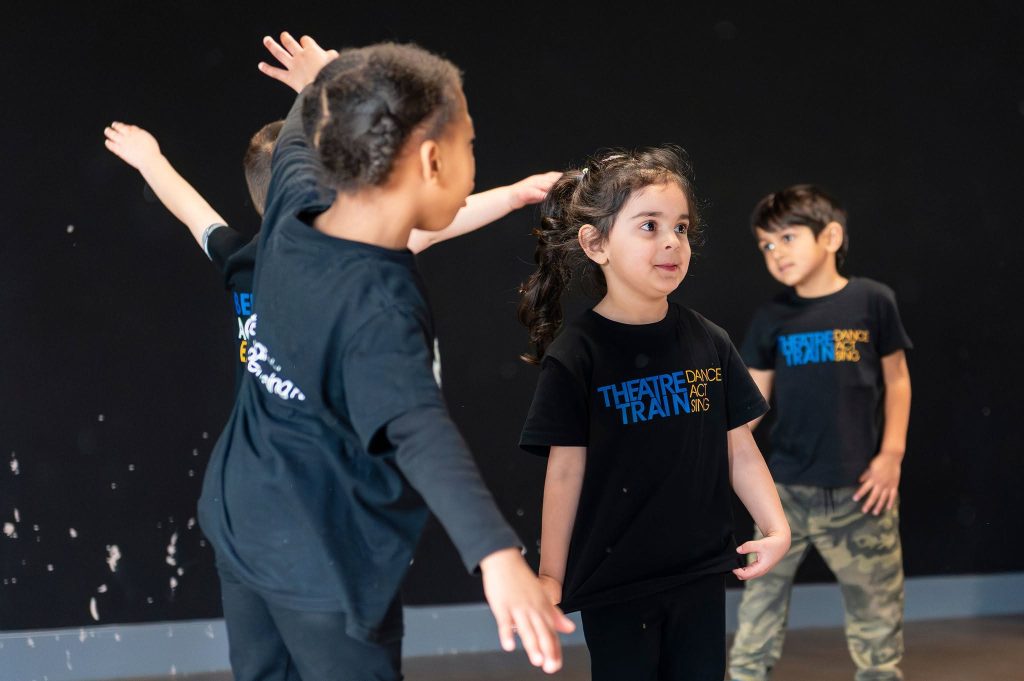
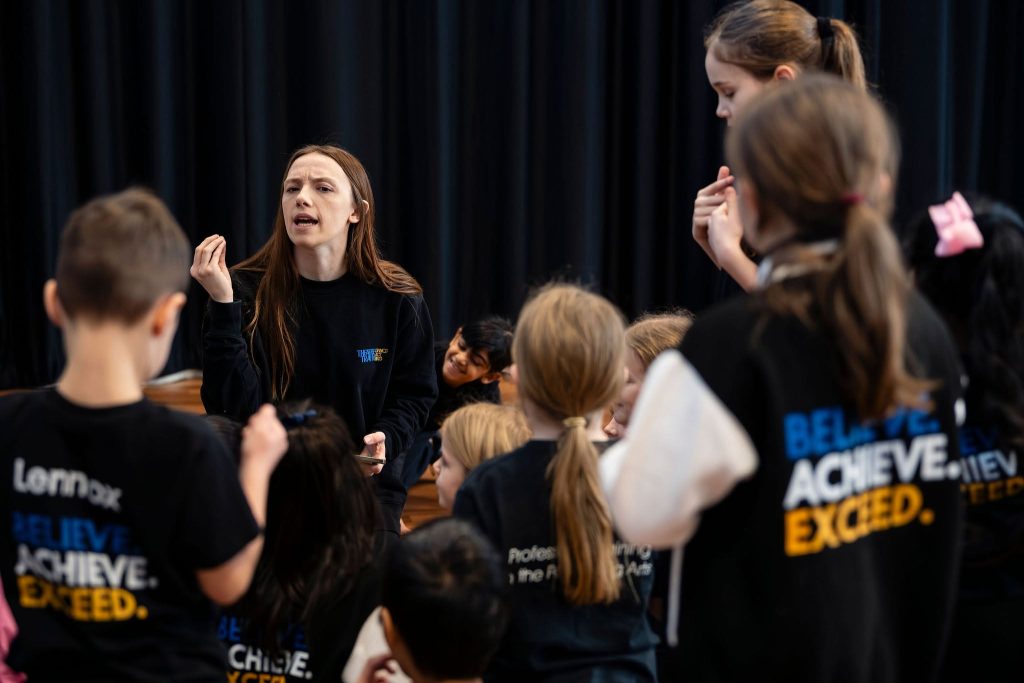
When parents first look at Theatretrain, they often focus on the obvious things. But the benefits of performing arts for children can go far beyond learning how to sing, dance or act.
The singing.
The dancing.
The drama.
And that’s completely understandable.
After all, that’s what happens in the classes.
But after more than 20 years with Theatretrain, I’ve noticed something interesting.
The things parents talk about most after a child has been with us for a while are rarely singing, dancing or drama.
Instead, they say things like:
“She’s much more confident now.”
“He’ll speak to people he doesn’t know.”
“They’ve made some lovely friends.”
“They’re much more willing to have a go.”
The performances matter.
But often, the biggest changes happen away from the stage.
Communication Skills
One of the first things many children learn is how to communicate more confidently.
That doesn’t necessarily mean becoming louder.
It means becoming more comfortable expressing themselves.
I’ve seen children arrive and barely be able to introduce themselves.
One little girl clung to her mum’s leg on her first day and couldn’t even tell me her name.
Week by week, she became a little more comfortable.
A little more willing to speak.
A little more willing to join in.
Now she’s happy chatting to teachers, students and parents.
Communication isn’t something children suddenly learn one day.
It develops through lots of small interactions.
Working in groups.
Sharing ideas.
Asking questions.
Contributing to conversations.
Those moments happen every week.
Confidence And Self-Belief
Confidence is probably the thing people talk about most when it comes to performing arts.
But I think confidence is often misunderstood.
Confidence isn’t being the loudest child in the room.
It isn’t always putting your hand up first.
Sometimes confidence is much quieter than that.
Sometimes it’s:
- joining in when you’d rather hide
- trying something new
- answering a question
- walking into a room without feeling nervous
I’ve watched children arrive convinced they can’t do something.
Then a few weeks later they’re doing exactly the thing they thought they couldn’t.
Not because somebody forced them.
Because they discovered they were capable of more than they realised.
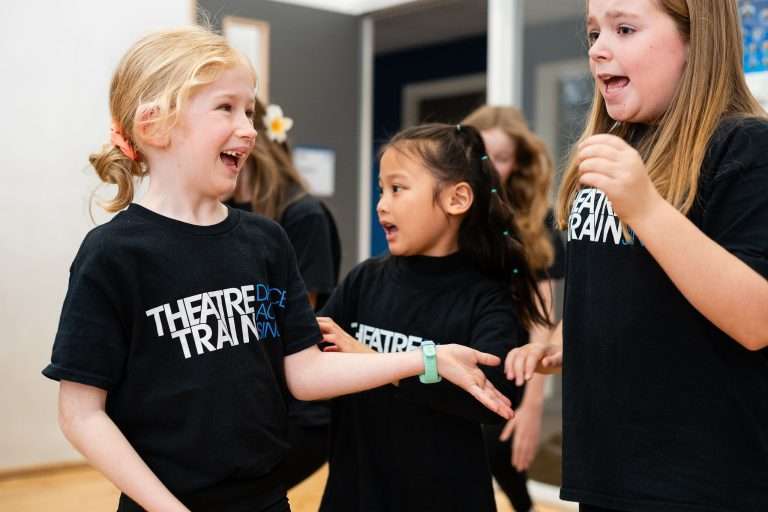
Resilience And Learning From Mistakes
One of my favourite phrases in class is:
“Loud and proud, strong and wrong.”
Children sometimes become embarrassed when they get something wrong.
Particularly as they get older.
But mistakes are part of learning.
Teachers can’t fix what they can’t see or hear.
So we encourage children to have a go.
To try.
To make mistakes.
To learn from them.
Over time, children begin to realise that getting something wrong isn’t something to fear.
It’s simply part of getting better.
That’s a lesson that reaches far beyond performing arts.
Friendships And Belonging
This is probably one of the most powerful things I see.
Children arrive from different schools.
Different backgrounds.
Different friendship groups.
Many don’t know anyone when they start.
Then gradually something changes.
They find people who enjoy the same things they do.
People who understand why they love singing.
Or acting.
Or dancing around the kitchen at home.
Parents often tell me:
“They’ve finally found their people.”
And I think that’s incredibly valuable.
Because every child deserves somewhere they feel they belong.
Teamwork And Working With Others
At home, children can perform however they like.
At Theatretrain, they learn how to work as part of a team.
They learn:
- how to listen to other people
- how to support others
- how to contribute ideas
- how to work towards a shared goal
Sometimes that means leading.
Sometimes it means stepping back and letting somebody else shine.
Both are important skills.
And both take practice.
Self-Expression
We spend a lot of time telling children what they should think, what they should learn and what they should do.
Performing arts gives them opportunities to express themselves.
To be creative.
To try ideas.
To take risks.
To discover what makes them unique.
For some children, that’s life-changing.
Especially those who don’t always feel they fit neatly into a box.
What Are the Benefits of Performing Arts for Children?
Yes, they’re learning singing.
Yes, they’re learning dance.
Yes, they’re learning drama.
But they’re also learning:
- communication
- confidence
- resilience
- teamwork
- friendship
- self-expression
The performing arts simply happen to be the vehicle we use to teach those things.
And if I’m honest, they’re often the things that make the biggest difference.
Frequently Asked Questions
Will performing arts help my child's confidence?
Often, yes. But confidence doesn’t always show up in the way parents expect. Sometimes it’s simply a child becoming more comfortable being themselves.
What life skills do children learn through performing arts?
Communication, teamwork, resilience, self-expression, confidence and the ability to work with others are some of the biggest skills we see children develop.
My child is shy. Will they still benefit?
Absolutely. Many children start quietly. The goal isn’t to change who they are. It’s to help them become comfortable being themselves.
Are these skills useful outside performing arts?
Very much so. The ability to communicate, work with others, recover from mistakes and express ideas confidently can help children throughout school and later life.
Thinking About A Taster Session?
The easiest way to understand the benefits of performing arts for children is to see them for yourself.
A taster session isn’t about deciding whether your child is a performer.
It’s about seeing how they respond to the environment, the people and the opportunities to grow.
Because sometimes the most important things children learn aren’t the things they’re performing on stage.
They’re the things they take with them everywhere else.