Making friends at drama classes is something many parents worry about before their child starts.
One of the things parents don’t always say out loud is:
“What if they don’t make friends?”
It’s often not the first question.
But it’s usually there underneath.
Especially if their child is:
- joining on their own
- a bit quieter
- or takes a little while to feel comfortable in new situations
Because let’s be honest…
Most of us wouldn’t particularly enjoy walking into a room full of people who already seem to know each other.
So it’s probably more helpful if I show you what actually happens rather than simply saying:
“They’ll be fine.”
What It Feels Like At The Start
When a new child walks in, they’re stepping into a group where other children already know each other.
That can feel uncertain.
Some children walk straight in and start chatting.
Others stay close to their parent and take a bit more time.
Both are completely normal.
When new children arrive, they’re introduced to one of our Welcome Ambassadors — an existing student whose job is to welcome them, show them where to go and help them settle in.
That means they’re not standing there wondering:
“Who do I talk to?”
“Where do I go?”
That part is taken care of straight away.
I think this is one of the biggest misconceptions.
Parents sometimes picture children arriving and immediately finding a new best friend.
Occasionally that happens.
Most of the time it doesn’t.
Friendships usually start much more quietly than that.
A shared activity.
A conversation during break.
Working together in a group.
Standing next to the same person a few weeks in a row.
Lots of little moments that gradually build into something more.
What Actually Happens During The Session
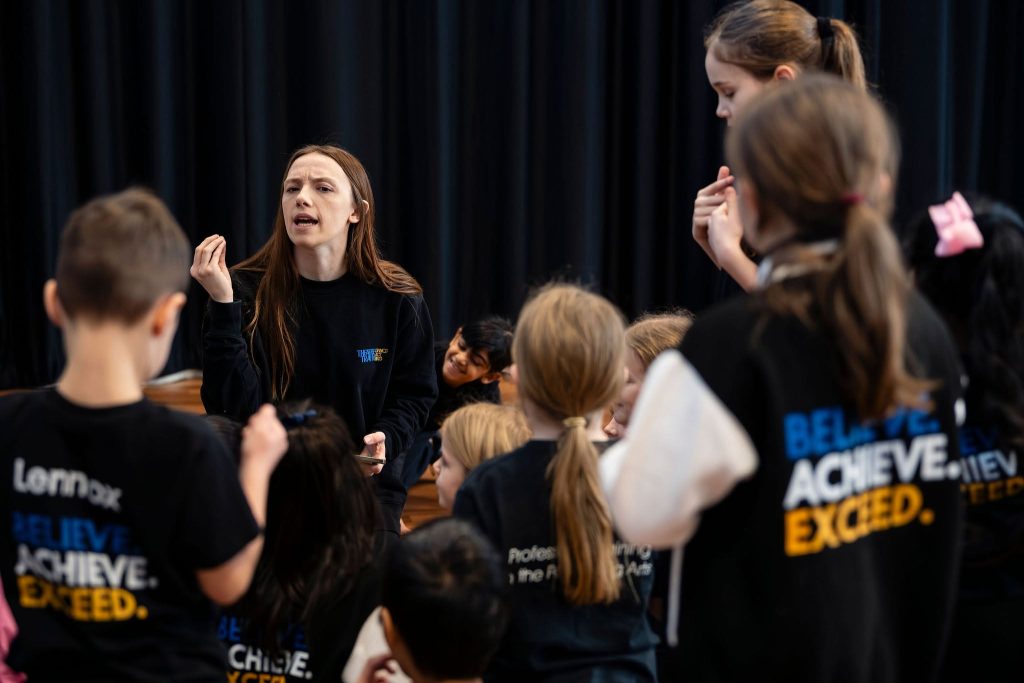
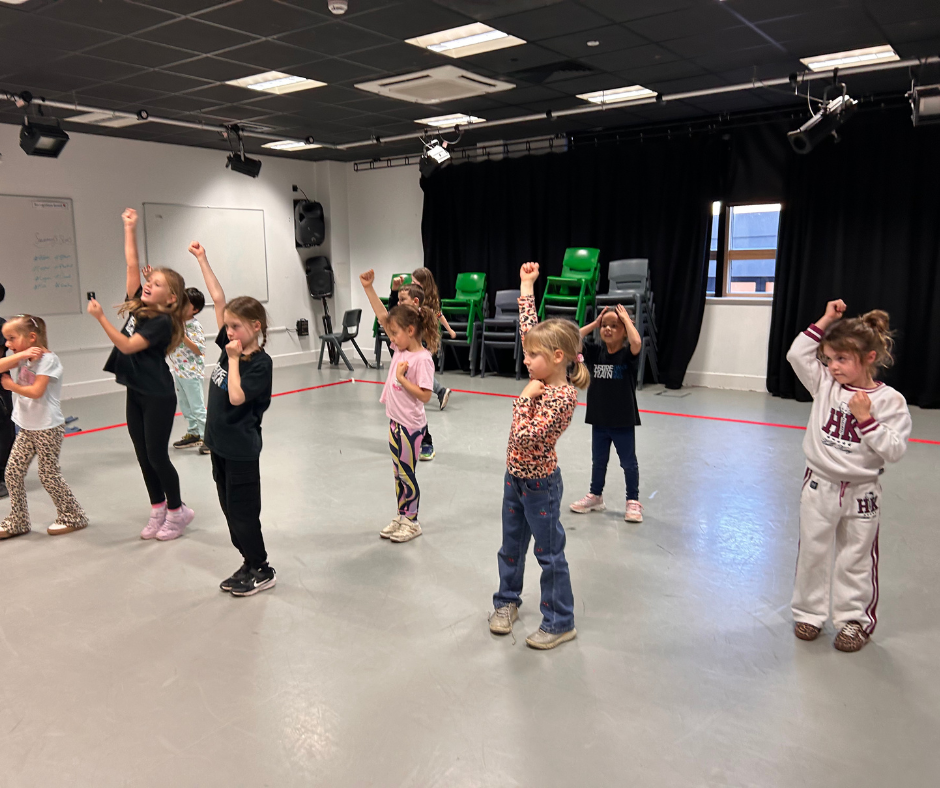
One of the reasons friendships form naturally at Theatretrain is because children are constantly working with different people.
They’re not sitting silently next to each other for three hours.
Throughout the session they might be:
- working in pairs
- creating a drama scene together
- learning a routine as a group
- solving a challenge with other students
Teachers regularly mix groups as well.
Sometimes it’s by birthday month.
Sometimes by height.
Sometimes by something completely random.
It sounds simple, but it works.
Nobody is left trying to find someone to talk to.
They’re already doing something together.
And that’s often where friendships begin.
A Real Example
We see versions of this all the time.
A child joins and doesn’t know anybody.
They spend most of the first session staying close to their Welcome Ambassador.
They’re polite.
They join in.
But they’re not particularly chatty.
The following week, they recognise a few faces.
By week three, they’re standing next to some of the same children.
A few weeks later, they’re arriving and heading straight over to say hello.
Nothing dramatic happened.
No big friendship moment.
Just lots of small interactions building over time.
That’s usually how friendships work.
Where Making Friends at Drama Classes Really Starts
Interestingly, it’s often not during the activities themselves.
It’s the moments in between.
Walking to the next class.
Waiting for everyone to arrive.
Having a quick chat at break time.
Laughing about something that happened in drama.
Those small moments matter.
By then, they’ve already spent time together.
They’ve worked together.
They’ve shared experiences.
So talking doesn’t feel quite so difficult anymore.
Is It Different For Older Children?
Not really.
Younger children tend to connect through games and activities.
Teenagers sometimes take a little longer.
But something interesting happens when children discover they’re surrounded by people who enjoy the same things they do.
They don’t have to explain why they like singing.
Or acting.
Or performing.
They’re simply around other people who get it.
And that makes conversations much easier.
What Parents Often Notice First
Most children don’t come home after one session announcing:
“I’ve made loads of friends.”
The first signs are usually much smaller.
Parents tell me things like:
“They mentioned somebody’s name.”
“They’re looking forward to next week.”
“They walked in more confidently.”
“They recognised someone when they arrived.”
Those small signs are often the beginning of friendship.
Frequently Asked Questions
How long does it take children to make friends?
Every child is different.
Some connect immediately.
Others take a few weeks.
Most friendships develop gradually through repeated interactions.
What if my child is shy?
That’s completely normal.
Many children take time to feel comfortable in a new environment.
Friendships often develop once children feel settled and safe.
What if they don't know anyone?
Most new students don’t.
That’s exactly why we have Welcome Ambassadors and why so much of our work is done in groups.
What if they don't make friends straight away?
That’s okay too.
Belonging usually comes before friendship.
Once children feel comfortable being part of the group, friendships often follow naturally.
If You're Worried About Your Child Making Friends
My honest answer is this:
Most of the friendships you see at Theatretrain started exactly the same way.
Two children who didn’t know each other.
Standing in the same room for the first time.
Friendships rarely happen in a single session.
They grow through shared experiences, familiar faces and lots of little conversations.
And before long, the child who was worried about not knowing anyone is often one of the children helping the next new student feel welcome.