March 2, 2026

The Last Laugh

In this thoughtful reflection, Kevin Dowsett, Artistic Director of Theatretrain, explores the unpredictable magic of live theatre. Inspired by a recent visit to see Arcadia at the Old Vic, he considers the brilliance of Tom Stoppard’s writing alongside the quirks of audience behaviour. From intellectual complexity to communal patience, Kevin reflects on how theatre challenges, delights and reminds us that every performance is shared.

A couple of weeks ago, I talked about an uncomfortable seat and a play without an interval, which led me to leave and watch in the bar. I didn’t expect to encounter an audience problem in my next visit to the theatre.

I went to Arcadia by Tom Stoppard, the playwright who died in November. It’s said to be his best play, so I was keen to see it. Back in the 80s, he donated some money to my youth theatre to help us host a group of Czech young people, so I knew he was a generous man, and I love his script for the film Shakespeare in Love.

It was performed at the Old Vic Theatre, a fine old London theatre with a long history: it was built in 1818. To stage it, they had taken out the stalls seats and built a circular stage that even had a revolve. Then they built two banks of seats on the stage. It was cleverly done, and the audience surrounded the action.

It’s a dazzling play that sometimes makes your brain hurt as it has so many ideas. It’s really about love in all its forms, and like any play, it’s about people reacting to each other and to events. There were a lot of opposites at work. The play was set in the present and in the period 1809-12, when the theatre was built. Other opposites were order v chaos, classical v romantic, logic v emotion and so on – you had to work to keep up.

It was magical, funny, and it stayed in the head long after the performance ended. Unfortunately for me, something else stayed in my head – the American man in the next seat. From the first minute I discovered he not only had a very loud laugh, but he did so often. At first, it was annoying because it felt like he was getting the jokes and showing off. But as he kept doing it, I realised it was just how he was. The people in the row in front did that English thing of pointedly turning their heads to look at him, but of course, it had no effect.

It made me think how an audience is a little community, and they are all different. Let’s face some people are annoying. We sit there mainly in silence and somehow have to get on with each other. In the end, I coped with it by getting used to it, and as the evening went on, I grew to accept it. In Shakespeare in Love, there’s a great moment when a puritan starts shouting out at the stage because he thinks it’s disgusting for a woman to play the part of a woman. The audience, who in those days stood, dealt with him by pushing him away. These days, we are kinder, even though our patience can, at times, be stretched.

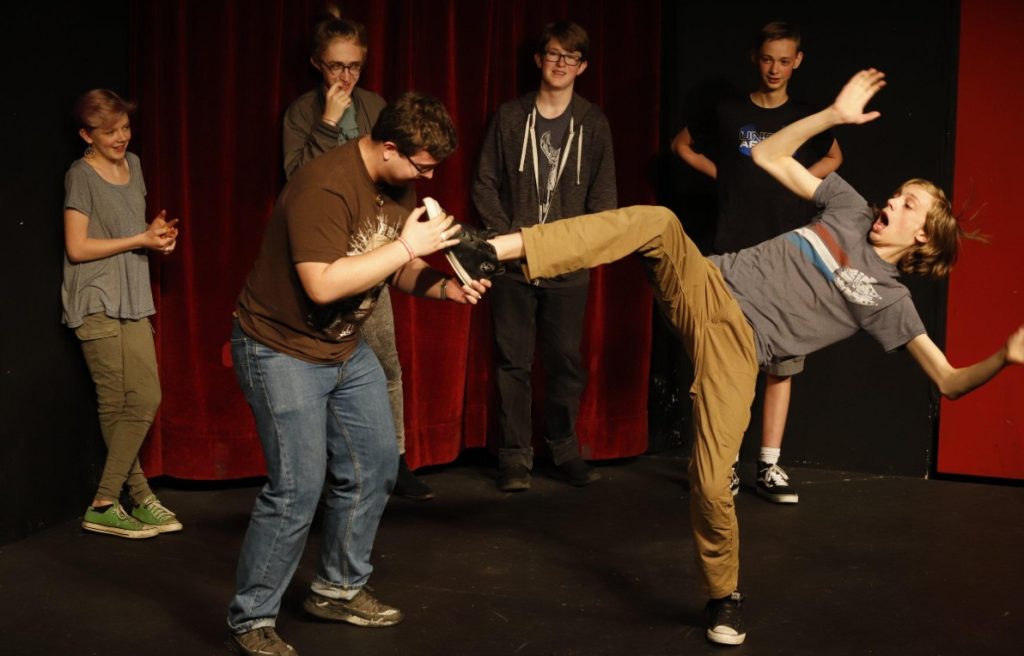
Theatretrain, a nationwide provider of weekend theatre schools for young people aged 4-18, specialises in weekly classes in acting, singing, and dancing. An emphasis is placed on learning valuable life skills such as confidence, empathy, courage, and resilience. If you know a child who loves to dance, act and sing or could do with a little confidence boost why not visit to find out what our performing arts classes can offer your child at one of our 80 locations across the UK.

Related Articles

Musicals and Young People

Musical theatre brings acting, singing and dancing together to create the excitement of a live show. But the fun isn’t just about the biggest roles or the most lines. It’s about becoming a character, daring to be bold and discovering how every performer helps bring the story to life.
Read more >

The Strange Thing About Hands

What do you do with your hands when you're standing in front of an audience? It's a surprisingly common question, particularly among young performers! In his latest blog, Theatretrain Artistic Director Kevin Dowsett explores why something as natural as using our hands can suddenly feel so awkward when we're performing. Through a wonderfully entertaining drama exercise, Kevin demonstrates how laughter, imagination and a little loss of control can help young people overcome self-consciousness and discover the freedom to perform naturally.
Read more >

The Lost Art of Looking Up

When was the last time you stopped looking at a screen and really noticed the world around you? In his latest blog, Theatretrain Artistic Director Kevin Dowsett reflects on how technology has changed the way we connect with others. From a frustrating encounter at a hospital reception desk to the simple pleasure of walking through a forest, Kevin explores why looking up, paying attention and being truly present are so important, particularly for young performers.
Read more >

It’s About Other People

What happens when we make mistakes, lose confidence or feel we've let others down? In his latest blog, Theatretrain Artistic Director Kevin Dowsett explores the extraordinary strength of belonging to a supportive group. Drawing on a memorable mishap from his own performing career, Kevin explains why kindness, empathy and standing together matter far more than getting everything right.
Read more >

People in Public

How much can we learn about people simply by watching how they behave around strangers? In his latest blog, Theatretrain Artistic Director Kevin Dowsett explores the fascinating unwritten rules of public spaces, from choosing a seat on the Tube to avoiding eye contact at rush hour. For actors and theatre-makers, everyday behaviour can provide some of the richest inspiration of all.
Read more >

Making an Entrance

How much can we learn about a character before they’ve even said a word? In his latest blog, Theatretrain Artistic Director Kevin Dowsett looks at the importance of those first few seconds on stage and how a simple entrance can immediately spark an audience’s curiosity. He also considers why first impressions matter beyond the rehearsal room – and what theatre might teach us about the way we enter a room in everyday life.
Read more >