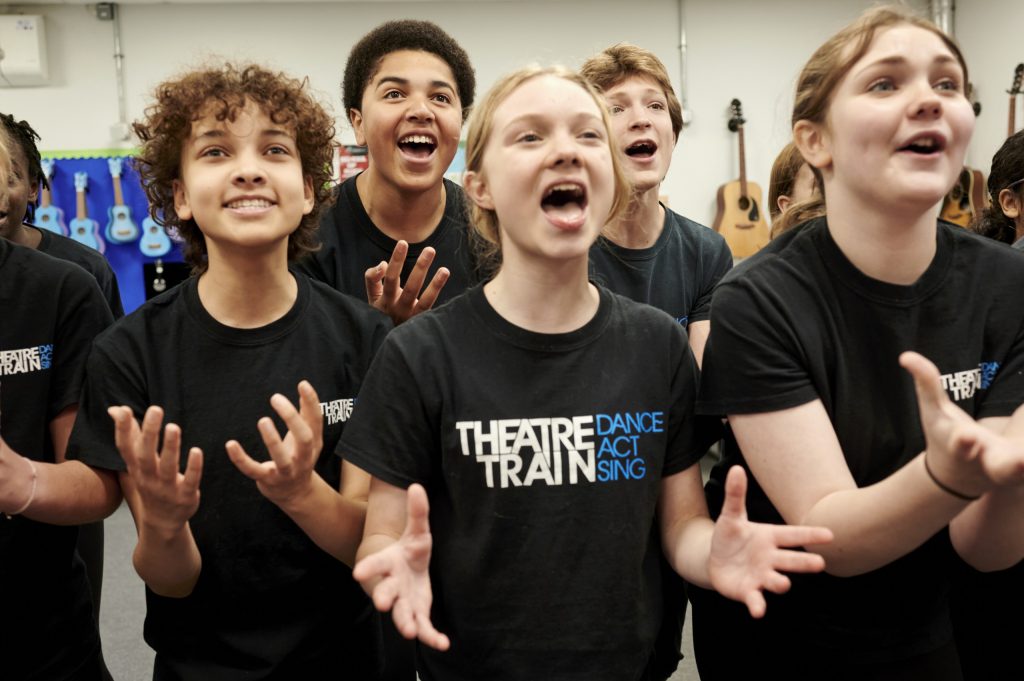
I have a phrase I use quite a lot when I’m teaching singing.
Loud and proud, strong and wrong.
Basically, I’d much rather the kids sing something loudly and get it wrong than sing so quietly I can’t hear what they’re doing.
Because if I can hear it, I can help them fix it.
We were singing a song recently and one of the children came in really loudly.
Unfortunately, she came in too soon 😂
You could see that little flash of embarrassment on her face.
So I said:
“I love that. Great sound, great confidence. It might have been in the wrong place, but it’s much harder to have the confidence to go for it. Great job.”
Usually followed by a high five.
And you could see the embarrassment disappear and the smile come back.
She’d got it wrong.
That was okay.
We could fix the timing.
The confidence to actually have a go was the bit I didn’t want her to lose.
Why are some children so worried about getting things wrong?
I’ve taught children for a long time and they’re all completely different.
Some will throw themselves into something without thinking twice.
Others want to be absolutely certain they’ve got it right before they’ll have a go.
You can see them looking around at everyone else first.
Or they’ll join in, but so quietly that you can barely hear them.
And I understand why.
Nobody particularly likes getting things wrong.
But when you’re learning to sing, dance or act, it’s going to happen.
Quite a lot!
You can’t learn something new and already know how to do it.
Getting it wrong helps me know how to help
This is one of the reasons I say “Loud and proud, strong and wrong” in singing.
If a child sings a wrong note confidently, I can hear it.
Great.
Now I know what we need to work on.
If they’re barely singing because they’re worried about making a mistake, it’s much harder for me to help.
And sometimes they’re much closer than they think.
They might have the notes right but be coming in at the wrong time.
Or perhaps they’ve understood most of it and there’s just one little bit that’s catching them out.
That’s all fixable.
But first I need them to have a go.
Does that mean it doesn't matter if they get it right?
No.
I do want them to get it right!
We’re teaching them, after all.
If a note is wrong, we’ll work on it.
If a dance step isn’t right, we’ll practise it.
If something in a scene isn’t working, we’ll look at why and try something different.
Saying it’s okay to make a mistake doesn’t mean everything they do is automatically brilliant.
It just means the mistake isn’t a disaster.
It’s part of getting there.
I think how we praise children matters too
I’m quite particular about this.
Of course there’s nothing wrong with telling a child:
“That was brilliant!”
But I think it means much more when they know what was brilliant.
Maybe they made a great sound.
Maybe they really committed to the character.
Maybe they remembered something they’d been struggling with the week before.
Maybe they kept going when something went wrong.
Sometimes I don’t even need to say anything.
If we’re halfway through a song and someone gets a tricky note right before everyone else does, a bit of strong eye contact and a smile is enough.
They know.
And the smile I get back tells me they know too.
I love those little moments.
What if I know they can do more?
I’ll ask for more.
If I know a child is capable of something, I don’t think I’m helping them by pretending something is amazing when I know they could do better.
I can still recognise what they’ve done well.
Then we try again.
Maybe this time I want a bit more energy.
Or clearer words.
Or a stronger character.
Or I know they can sing that note without following the person next to them.
That’s part of teaching too.
I want them to feel good about what they’ve achieved, but I also want them to keep improving.
Getting something wrong isn't the same as failing
I think that’s the bit I really want the kids to understand.
If you’re learning something and you get it wrong, we haven’t reached the end of the story.
We’ve just found the bit we need to work on.
Have another go.
Try it differently.
Ask for help.
Listen again.
And sometimes laugh about it, because some mistakes are very funny.
I don’t want children to think they have to be perfect before they can put their hand up, share an idea, sing loudly or give something a try.
So yes, I absolutely want them to get the note right eventually.
I just don’t want them to be so worried about getting it wrong that they’re too frightened to sing it in the first place.
Loud and proud, strong and wrong.
We can fix the wrong bit.
Find out more about our
amazing performing arts classes here
Theatretrain Hitchin
Saturdays
Hitchin Girls School
9.30am-12.30pm
Theatretrain Letchworth
Saturdays
St Christopher’s School
9am-12pm
Theatretrain Stevenage
Saturdays
Marriotts School
1.30pm-4.30pm