What is the difference between a dance school and a performing arts school?
The biggest difference is usually what the classes focus on.
A traditional dance school will generally concentrate mainly on dance technique.
Depending on the school, children might learn ballet, tap, modern, jazz, contemporary, street dance or a mixture of styles.
Some dance schools also offer singing, drama or musical theatre classes, but dance is usually at the heart of what they do.
A performing arts school tends to offer a broader mix.
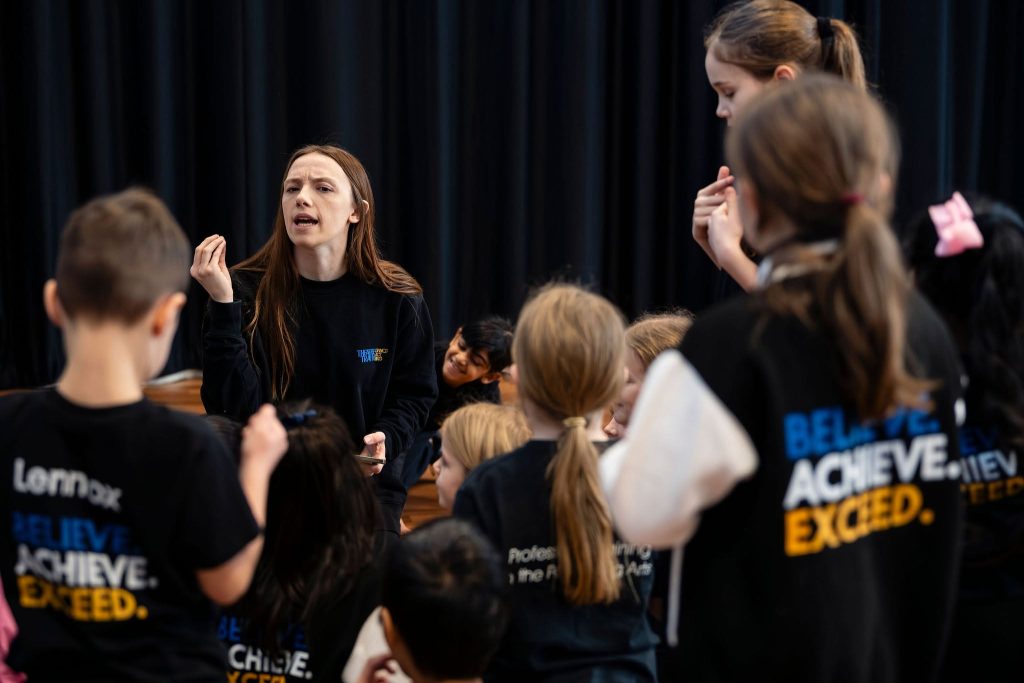
At Theatretrain, for example, children aged 6–18 spend their weekly three-hour session doing:
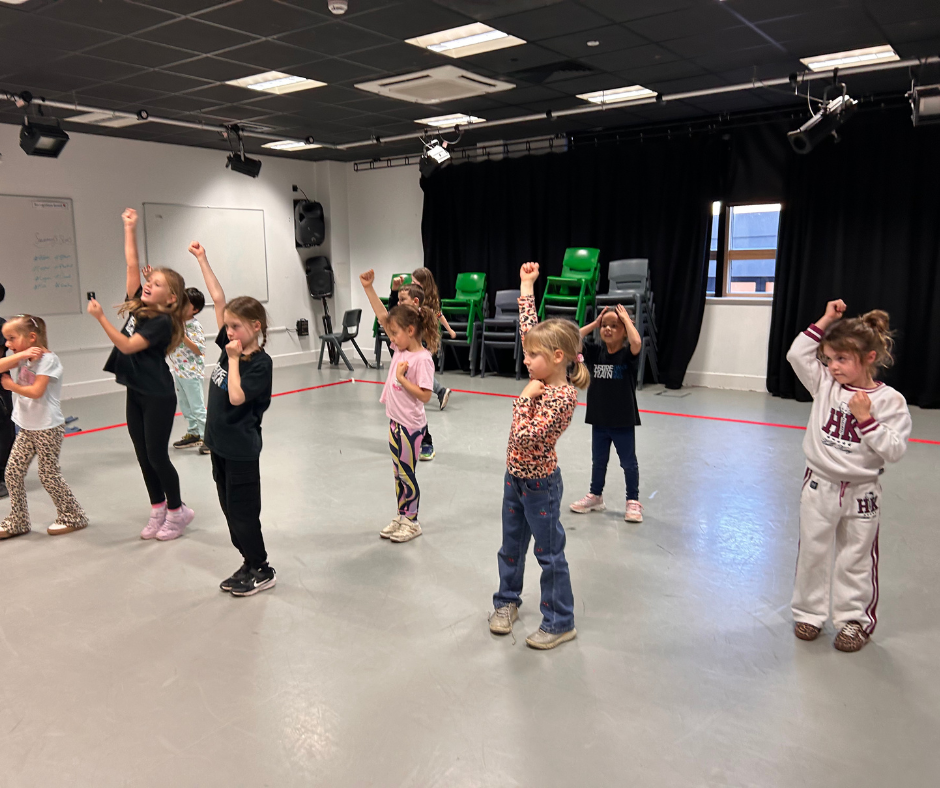
- one hour of dancing
- one hour of singing
- one hour of acting
So rather than specialising in one discipline, children experience all three.
What if my child really loves dancing?
If dance is the thing your child absolutely loves and they want to spend most of their time developing their dance technique, a specialist dance school may be the better choice.
That is particularly true if your child wants to progress through graded dance exams or specialise in something like ballet.
At Theatretrain, dance is an important part of what we do, but it is only one part.
A child who really doesn’t enjoy singing or acting and only wants to dance could find a three-discipline performing arts class frustrating.
And that’s completely fine.
Finding the right class matters much more than choosing a particular name above the door.
What if my child loves musicals and performing?
This is where a performing arts school can come into its own.
Some children don’t want to choose between singing, dancing and acting.
They love all of it.
They want to be in shows, learn choreography, create characters, sing as part of a company and experience the buzz of putting everything together.
For those children, a performing arts school can give them much more variety.
They might spend one hour learning a dance routine and then walk into their next class and do something completely different.
For some children, that variety is exactly what keeps them interested.
Does my child need to be good at all three?
No.
And this is something parents sometimes worry about.
Your child might love acting but feel nervous about singing.
They might dance around the kitchen every evening but have never acted before.
Or they may arrive without knowing which of the three they enjoy most.
That’s perfectly normal.
One of the benefits of a performing arts class is that children get the chance to try different things.
Sometimes the thing they are least confident about when they arrive becomes the thing they end up loving.
Are dance schools more serious?
Not necessarily.
There are highly recreational dance schools and extremely intensive ones.
The same is true of performing arts schools.
The bigger difference is often how progress is measured.
Many dance schools follow an examination syllabus. Children may work towards grades and take formal exams as they progress.
For some families, that structure is really important.
At Theatretrain, we don’t work towards weekly graded examinations.
Our emphasis is on developing skills through classes, rehearsals and performance.
So if certificates, grades and moving through a formal syllabus are important to your child, you should ask any school how their training works before joining.
What about children who aren't naturally confident?
Either type of school can be brilliant for a less confident child.
The important thing is the environment they walk into.
I’d look at things like:
- How are new children welcomed?
- What happens if they are nervous?
- Are they expected to join in immediately?
- How large are the classes?
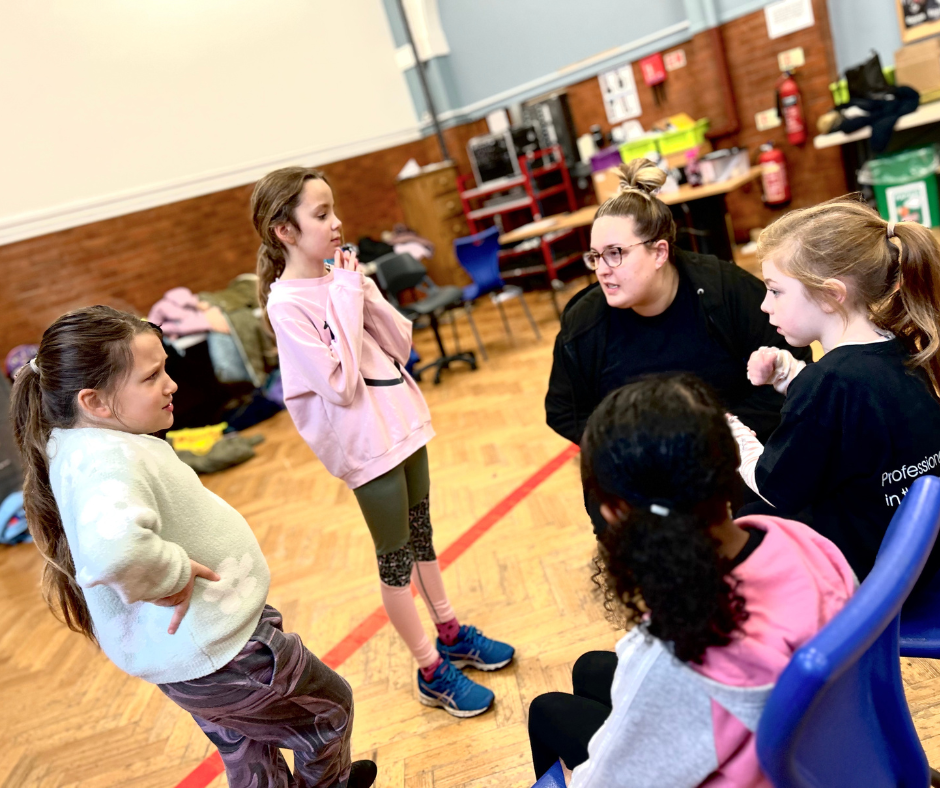
- Does the teacher notice the quieter children?
- Is the atmosphere competitive or collaborative?
- Can your child try a session before committing?
A shy child doesn’t necessarily need a quieter activity.
Sometimes they simply need the right room, the right teacher and enough time to feel safe there.
Is a performing arts school better for confidence?
I’d be wary of any school promising to turn a shy child into a confident one overnight.
Confidence usually grows much more gradually than that.
What performing arts can offer is lots of little opportunities to practise things that require confidence.
Speaking in front of other people.
Working with children they don’t know.
Trying an idea that might not work.
Learning choreography.
Using their voice.
Performing as part of a group.
And perhaps most importantly, discovering that making a mistake isn’t the end of the world.
Dance can offer many of those same opportunities too.
So I wouldn’t choose purely on the promise of “confidence”.
I’d choose the place where your child feels they belong.
What if my child wants to perform professionally one day?
You don’t need to make that decision when they’re six, eight or ten.
Really.
If your child later becomes serious about performing professionally, there may come a point when they want more specialist training.
That could mean additional dance classes, singing lessons, acting training or vocational training.
But for younger children, broad experience can be incredibly valuable.
They get to discover what they’re good at, what they love and what they might want to pursue further.
Could my child do both?
Absolutely.
Some of our children do.
A child might attend a dance school because they particularly love dance and come to Theatretrain because they also want acting, singing and performance experience.
The two aren’t mutually exclusive.
Obviously, there are practical things to consider (time, cost and how much your child actually wants to do each week) but one doesn’t have to replace the other.
So which should I choose?
I’d think about your child rather than the type of school.
A dance school might suit them better if:
- Dance is by far their favourite thing.
- They want more intensive dance training.
- They are particularly interested in ballet, tap or another specialist style.
- They like working towards grades and exams.
- They aren’t particularly interested in singing or acting.
A performing arts school might suit them better if:
- They enjoy singing, dancing and acting.
- They love musical theatre or putting on shows.
- They enjoy variety.
- They haven’t yet discovered which area of performing they love most.
- They enjoy working as part of a company.
- They want opportunities to develop performance skills as well as technique.
And there will be children who happily do both.
Don't choose from the website alone
This is probably the most important advice I can give you.
You can learn a lot from a website, but you can’t really tell what a children’s class feels like until your child experiences it.
Two schools offering very similar classes can feel completely different when you walk through the door.
So ask whether your child can try a class.
Watch how they are welcomed.
Ask them afterwards what they thought.
Not:
“Were you good at it?”
But:
“Did you enjoy being there?”
Because when children find the right environment, that’s usually where the learning starts.
What happens at Theatretrain?
At Theatretrain Hitchin, Letchworth and Stevenage, our Main Company is for children aged 6–18.
Each weekly session lasts three hours, with an hour each of acting, singing and dancing.
We don’t expect children to arrive being good at all three.
And we’re very happy to tell you if, after trying us, we think another type of class would suit your child better.
That’s one of the reasons we offer a full taster session.
It gives your child the chance to experience Theatretrain properly before you make a decision.
Find Out About Our Taster Sessions
Fill in the form below to find out more information on your local centre