f your child goes to a performing arts class, you probably have a fairly good idea of what they’ll be doing.
They’ll sing songs, learn dances and do drama.
But what are they actually learning while they’re doing all of that?
It’s something I was reminded of recently when I covered one of our singing classes at Theatretrain.
We were learning Eye of the Tiger.
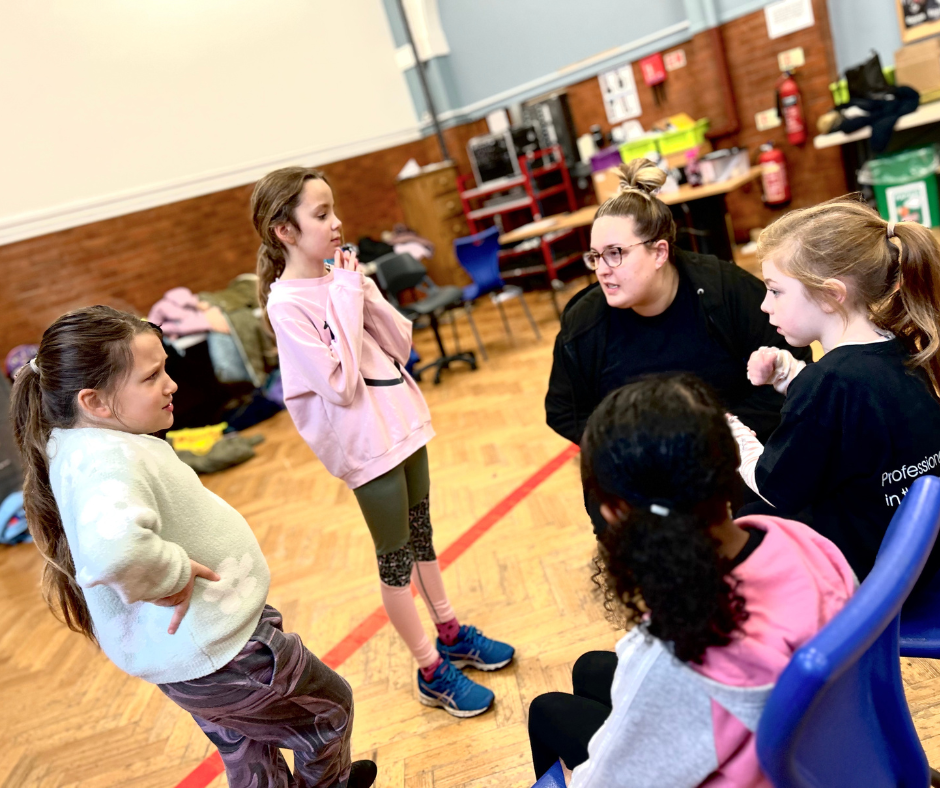
I played the kids two different versions of the song. The original version and then an acoustic version.
I asked them how each version made them feel.
They said the original felt powerful. Like winning.
Then we listened to the acoustic version.
One of the kids said it felt like a warning.
Interesting, I thought.
So I asked them to sing the original version again, but this time I wanted them to perform it as though it was a warning.
They really went for it.
Their faces changed, their body language got smaller and suddenly the whole room felt different.
Yet they were singing exactly the same version of exactly the same song.
I found that really interesting.
Because I think they got something that day that I could have spent ages trying to explain to them.
Singing the right notes and knowing the words is only half the picture.
Once they added the acting side into it, it became a performance.
And you could feel the difference.
That’s the sort of thing that’s going on in our classes all the time.
So what are they actually learning in singing?
Yes, they’re learning songs.
But they’re also learning how to use their voice, how to breathe properly, how to listen to the people around them and how to stay on their own part when someone next to them might be singing something completely different.
As they get older and more experienced, we can make what we’re giving them more challenging.
They might be singing harmonies rather than the tune or having to listen for where their part fits with everyone else’s.
And then there’s the performance side of it.
What does the song mean? Who are you singing it to? What are you trying to make the audience feel?
You can know every single word and sing every note correctly and still not really perform the song.
That’s what the kids discovered with Eye of the Tiger.
What are they learning in dance?
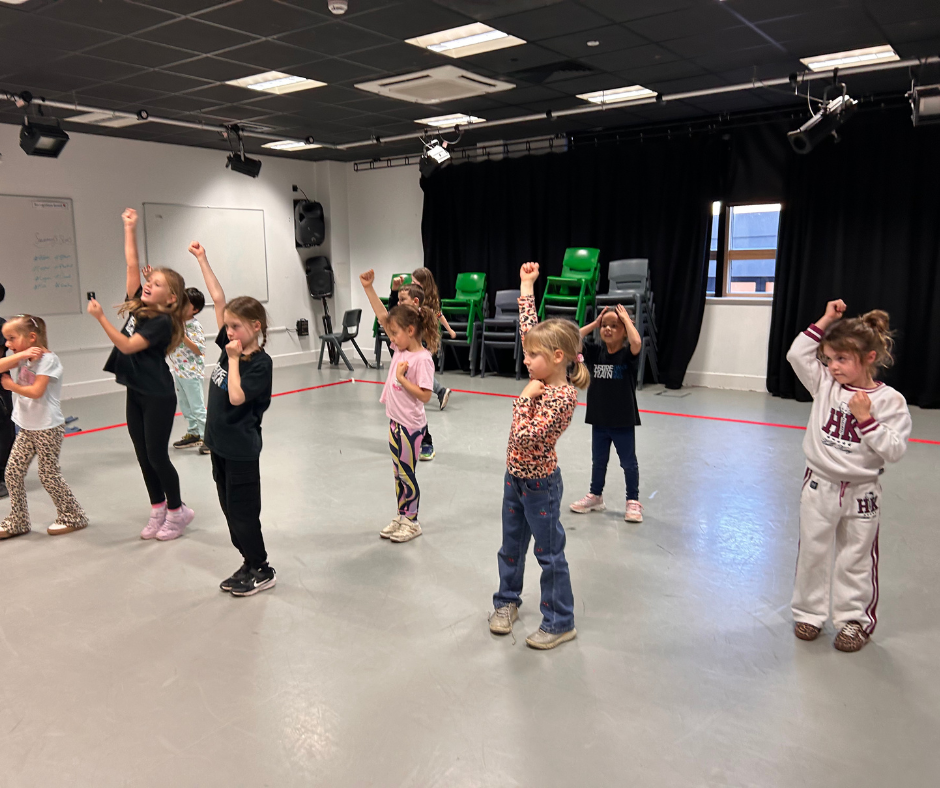
Of course they’re learning steps and routines, but there’s lots more going on.
They’re learning about timing, coordination, technique and how to use their bodies.
They’re also learning how to use the space around them and how to dance alongside other people.
Sometimes they’ll be taught choreography and need to get it as precise as possible.
Other times they might be given a task and asked to come up with movement themselves.
I really like that balance.
There are times when I want the kids to be able to watch, listen and reproduce what they’ve been taught.
And there are other times when I want to see what ideas they come up with themselves.
And what are they learning in drama?
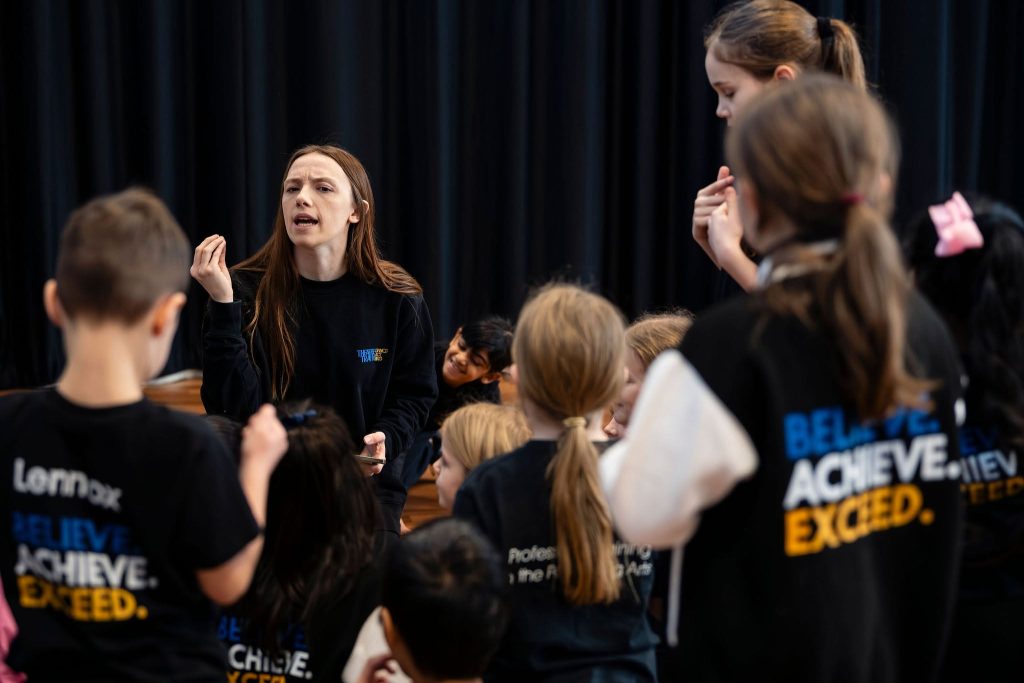
Drama can be very different from week to week.
Sometimes they’ll be working with a script, but they might also be given an idea and asked to create something themselves.
That means deciding what happens, who the characters are and how they’re going to tell the story.
And, if they’re working in a group, somehow agreeing on all of that with everyone else! 😂
They’re learning how to create a character rather than just say some lines.
Why does that character say what they say?
How do they feel?
How would they move?
How would they react to what another character has just said?
Again, there’s a big difference between remembering the words and actually performing them.
Why do we teach all three?
Our Main Company children have an hour of singing, an hour of dance and an hour of drama each week.
They’re three separate classes, but they’re not really three separate things.
The Eye of the Tiger lesson is a perfect example.
Technically I was teaching singing.
But it was the acting that made the biggest difference to what I heard.
The same happens in the other direction.
Drama uses movement. Dance can tell a story. Singing needs expression.
Eventually they start putting all of those things together.
And that’s when it gets really interesting.
What about all the other things children get from performing arts?
This is probably where people expect me to say confidence.
And yes, we see children grow in confidence all the time.
But I don’t think we need to set out to have a “confidence lesson.”
It happens while they’re doing everything else.
They have an idea and say it out loud.
They get something wrong and have another go.
They’re given something difficult and eventually get it.
They work with someone they wouldn’t normally choose to work with.
They have to listen to somebody else’s idea.
Sometimes they have to accept that their idea isn’t the one the group is going with!
All of that is happening while they think they’re learning a song, creating a scene or rehearsing a dance.
“What did you do at Theatretrain today?”
If you’ve ever asked your child what they did in class and received a very unhelpful:
“Nothing.”
You’re not alone 😂
You might get:
“We did a dance.”
“We played a game.”
“We sang Eye of the Tiger.”
And they’re right.
They probably did.
There’s just quite a lot going on underneath that answer.
Find out more about our
amazing performing arts classes here
Theatretrain Hitchin
Saturdays
Hitchin Girls School
9.30am-12.30pm
Theatretrain Letchworth
Saturdays
St Christopher’s School
9am-12pm
Theatretrain Stevenage
Saturdays
Marriotts School
1.30pm-4.30pm